
TESA and PESA in IVF: Difference, Procedure, Cost and Success Rate
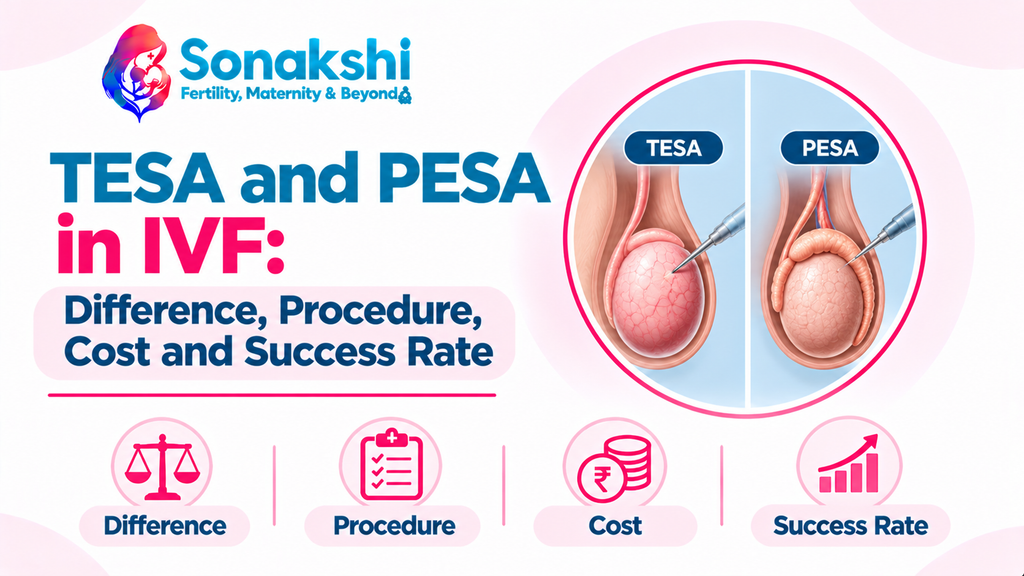
A semen report that says “zero sperm” can knock the air out of a room. You read it twice. Maybe three times. Then the question arrives, quiet but heavy: is this the end? Not always. For many couples, TESA and PESA are the next doors to knock on. Each one is a small sperm retrieval procedure that takes sperm straight from the male body when none shows up in a normal semen sample. Many people also ask about TESA vs PESA and which one is right. So here is everything about TESA and PESA, explained the way you’d explain it to a curious ten-year-old. Simple. One step at a time.
What Are TESA and PESA in IVF?
Testicular sperm aspiration is the full name of TESA. A doctor uses a thin needle to draw sperm from inside the testis. Percutaneous epididymal sperm aspiration is the full name of PESA. The long word “percutaneous” means through the skin, and the epididymis is a tiny coiled tube behind the testis where sperm finishes growing. Either way, each one is a sperm retrieval procedure, and the sperm collected is later used in IVF.
Why would someone need this? Because some men have azoospermia, which means no sperm in the semen. Sometimes sperm is made but blocked, after a vasectomy, an infection, or when a tube is missing at birth. Doctors call this obstructive. Other times, the testis makes very little sperm. That is non-obstructive. TESA and PESA help in both cases, though the results are different. We’ll get there.
PESA Procedure: How Percutaneous Epididymal Sperm Aspiration Works
The PESA procedure is short, usually 15 to 30 minutes. The skin is numbed with local anaesthesia. The doctor holds the epididymis gently, passes a fine needle through the skin, and draws a little fluid. An embryologist checks that fluid under a microscope, often in the next room. Sperm seen? Good. It can be used the same day or frozen. No cut, usually no stitches. In percutaneous epididymal sperm aspiration, if nothing is found, the doctor may switch to TESA in the same sitting, and then the PESA procedure simply becomes step one.
TESA Procedure: How Testicular Sperm Aspiration Works
The TESA procedure looks similar but goes a little deeper. Local anaesthesia again, sometimes light sedation. The needle goes into the testis itself and takes a tiny bit of fluid and tissue. Testicular sperm aspiration is often chosen when sperm production is low, or when PESA has found nothing. It can feel a bit more uncomfortable than PESA. Still, most men walk home the same day, and the TESA procedure rarely takes more than 30 minutes.
TESA vs PESA: The Real Difference in Simple Words
TESA vs PESA is mostly about where the needle goes. Percutaneous epididymal sperm aspiration targets the epididymis, so it suits blocked tubes where the testis works fine. The TESA procedure targets the testis, so it suits men whose sperm production is low. The PESA procedure is generally gentler. TESA also gives tissue that can show how sperm is being made. Neither is better in every case, and that’s the honest answer. Your reports, hormones, scrotal ultrasound, and your doctor’s judgment decide. People forget this when they read about TESA vs PESA online.
ICSI With Retrieved Sperm: How the Pregnancy Actually Happens
Sperm from these methods is few in number and sometimes weak. So normal IVF, where sperm and egg are left together in a dish, doesn’t work well. The lab uses ICSI instead. An embryologist picks one healthy sperm and injects it straight into one egg. ICSI with retrieved sperm is the standard path after both procedures. The embryos grow for three to five days, then one is placed in the uterus.
Timing can differ. Some clinics retrieve sperm on the same day as the woman’s egg collection. Others do it earlier and freeze the sperm, which confirms that sperm exists before the woman starts injections. Both ways work, because ICSI with retrieved sperm can use fresh or frozen sperm.
Success Rate: Which Numbers Can You Trust?
Two questions here, not one. Will sperm be found? And will the ICSI cycle work? In obstructive cases, sperm is found in about 80 to 90 percent of men, sometimes higher with PESA. In non-obstructive cases, it falls to around 30 to 60 percent, depending on the cause. Testicular sperm aspiration and its cousin, percutaneous epididymal sperm aspiration, therefore depend heavily on why sperm is missing. Once sperm is found, ICSI with retrieved sperm follows normal ICSI results: about 40 to 50 percent per cycle for women under 35, lower as age rises. The woman’s age matters a great deal. So does the lab. No honest doctor promises a number. For TESA and PESA, your own reports are the best clue.
TESA and PESA Cost in India
Costs shift by city and clinic. As a rough guide, the sperm retrieval procedure itself costs around ₹15,000 to ₹35,000, and it’s usually added on top of the ICSI cycle, which commonly runs about ₹1,50,000 to ₹3,50,000. Freezing, anaesthesia, and tests can be extra. Insurance rarely covers any of it. In TESA vs PESA, the price gap is usually small, so choose by medical need, not by the bill. The cost of ICSI with retrieved sperm should never be a surprise at the billing desk, so ask for a written estimate. Also ask what is included for TESA and PESA.
Recovery and Risks: What Men Actually Feel
After a PESA procedure, most men feel mild pain, swelling, or bruising for one to two days. Rest, simple painkillers your doctor allows, and snug supportive underwear usually help. Skip heavy lifting and sex for a few days, or as advised. Rare risks include infection, bleeding, and a blood collection in the scrotum. Fever, bad swelling, or pain that grows worse? Call the clinic fast. TESA and PESA are low risk, but low risk isn’t no risk. The same care applies after any sperm retrieval procedure.
Finding the Best IVF Center in Haryana for TESA and PESA
Plenty of couples type best IVF center near me into Google late at night. Fair enough. But the nearest clinic isn’t always the right one. Look for an embryology lab that does ICSI every day, a doctor trained in each sperm retrieval procedure, honest counselling, and clear packages. Ask how many cases of TESA and PESA they handle each year, and what the plan is if no sperm is found. The best IVF center in Haryana will answer plainly and won’t rush you.
Sonakshi Care is one place where couples can sit down, go through their reports, and understand whether the TESA procedure or the PESA procedure fits their case before any big decision is made. Bring your old semen reports. Bring your questions too. If you’re unsure whether TESA and PESA are right for you, that first conversation is where clarity begins.
FAQs
1. Are TESA and PESA painful, and do I need to stay in the hospital?
Mostly no. Both are done under local anaesthesia, so you feel pressure, maybe a small pinch. Some clinics add light sedation for the TESA procedure, which makes it easier. Afterward, there can be soreness for a day or two. The PESA procedure is usually gentler. With percutaneous epididymal sperm aspiration, most men go home within a few hours. A hospital stay isn’t normally needed.
2. Which is better, TESA vs PESA?
There is no single winner. TESA vs PESA depends on why sperm is missing. If tubes are blocked, PESA is often tried first. If the testis makes very little sperm, or PESA finds nothing, testicular sperm aspiration is the next step. If both fail, the doctor may talk about TESE or micro-TESE, which are bigger procedures. Your doctor decides after checking hormones, an ultrasound, and your history.
3. Can we conceive naturally after sperm retrieval?
No. The sperm collected is too few and not strong enough to travel on its own, and it can’t be used for simple insemination either. After any sperm retrieval procedure, ICSI with retrieved sperm is needed. The good news is that ICSI needs just one healthy sperm for each egg, so even a small sample can be enough.
4. What happens if TESA and PESA do not find sperm?
It can happen, more often in non-obstructive cases. The doctor may repeat the TESA procedure in a different area, or move to TESE or micro-TESE. Testicular sperm aspiration is usually the first try, not the last one. If no sperm can be found at all, donor sperm or adoption may be talked about gently, with counselling. It’s heavy news, and no one should face it alone.
5. Are babies born this way healthy? Is there any genetic risk?
Most babies conceived through ICSI with retrieved sperm are healthy. Still, some causes of azoospermia are genetic, such as Y chromosome microdeletions or gene changes linked to a missing vas deferens. So doctors often advise a karyotype test, genetic tests, and genetic counselling first. It’s better to know early, and it helps you plan with open eyes.
6. How should I prepare for TESA and PESA, and how long does the whole process take?
Bring every report you have: past semen analyses, hormone tests such as FSH, LH, and testosterone, and a scrotal ultrasound. Tell the doctor about medicines, past surgeries, and any vasectomy. Follow the fasting instructions if sedation is planned. The sperm retrieval procedure itself takes under an hour, but a full IVF and ICSI cycle usually takes four to eight weeks, because the woman’s treatment needs its own time. Your doctor will line up both timelines.


