
Blocked Fallopian Tubes and Pregnancy: Important Things to Know Before IVF
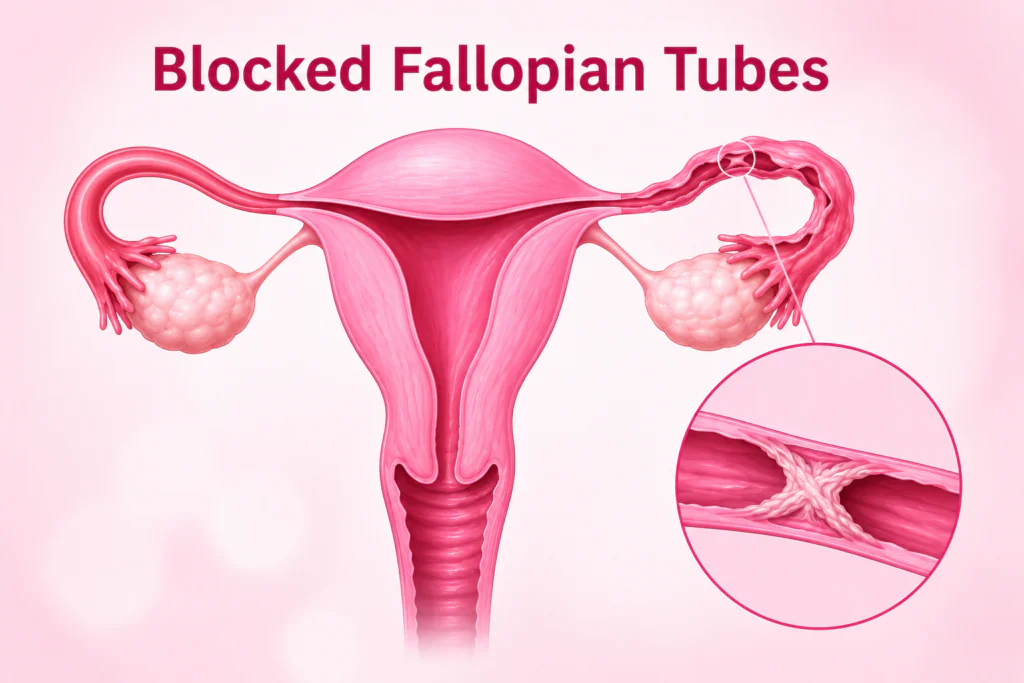
Trying to conceive can be an emotional journey, especially when you are diagnosed with Blocked Fallopian Tubes. Many women have an important question after receiving this diagnosis: “Do I need IVF if my tubes are blocked?”
The answer is not the same for everyone. The right treatment depends on whether one or both Fallopian Tubes are blocked, where the blockage is located, how severe the blockage is, the woman’s age, ovarian reserve, sperm quality and other fertility factors.
A diagnosis of Fallopian Tube Blockage does not always mean that IVF is the only option. In some cases, tubal treatment or surgery may be considered, while in other situations, IVF treatment may be a more suitable option.
What Are Fallopian Tubes and Why Are They Important for Pregnancy?
Fallopian Tubes are an important part of the female reproductive system. They connect the ovaries with the uterus.
After ovulation, an egg is released from the ovary and normally travels through the Fallopian Tube. Fertilization can occur when sperm meets the egg in the tube. The resulting embryo then travels towards the uterus, where implantation can take place.
When a Fallopian Tube is blocked, this natural process can be affected. Depending on the type and severity of the blockage, it may become more difficult to conceive naturally.
What Causes Fallopian Tube Blockage?
Fallopian Tube Blockage can happen due to several conditions, including pelvic infections, previous pelvic or abdominal surgery, endometriosis, pelvic adhesions and other tubal problems.
Some women may not experience noticeable symptoms. In many cases, the blockage is discovered during a fertility evaluation after a couple has difficulty conceiving.
If you have been trying to conceive without success, a proper fertility evaluation can help identify whether blocked tubes or another fertility factor may be contributing to the problem.
How Is Fallopian Tube Blockage Diagnosed?
A fertility specialist may recommend different tests depending on your medical history and fertility concerns.
HSG Test
Hysterosalpingography (HSG) is commonly used to evaluate whether the uterus and Fallopian Tubes are open.
During an HSG test, contrast dye is introduced through the uterus and X-ray imaging is used to observe whether the dye passes through the Fallopian Tubes.
Depending on the findings, your doctor may recommend additional evaluation before deciding on IVF or tubal treatment.
Can You Get Pregnant With One Blocked Fallopian Tube?
Yes, pregnancy may still be possible when only one Fallopian Tube is blocked.
If the other tube is healthy and functional and factors such as ovulation, ovarian reserve and sperm quality are favorable, natural conception may still be possible.
However, the chances of pregnancy depend on several individual factors. A fertility expert can evaluate your medical history, fertility reports and tubal condition to recommend the most appropriate approach.
What Happens If Both Fallopian Tubes Are Blocked?
When both Fallopian Tubes are completely blocked, natural conception can become difficult because the egg and sperm may not be able to meet naturally.
In such situations, IVF pregnancy can be an important fertility treatment option.
During IVF, eggs are collected from the ovaries and fertilized with sperm in a laboratory. After embryo development, an embryo is transferred into the uterus. This allows fertilization to take place without requiring the egg and sperm to meet naturally inside the Fallopian Tube.
However, blocked tubes do not automatically mean that every patient needs IVF immediately. The complete fertility profile should be evaluated before treatment is selected.
Is IVF the Only Treatment for Blocked Fallopian Tubes?
No. IVF is not necessarily the only option for every woman with blocked Fallopian Tubes.
Depending on the location and severity of the blockage, some women may be candidates for tubal surgery, tubal cannulation or other tubal procedures.
The choice between tubal treatment and IVF may depend on:
- Woman’s age
- Ovarian reserve
- Location of the blockage
- Extent of tubal damage
- Sperm quality
- Duration of infertility
- Previous fertility treatments
- Presence of endometriosis or other fertility conditions
A fertility expert can review these factors and help determine whether tubal treatment or IVF may be more appropriate.
What Is Hydrosalpinx?
Hydrosalpinx is a condition in which fluid builds up inside a blocked Fallopian Tube.
It can occur when a Fallopian Tube becomes damaged and blocked. Hydrosalpinx is important to identify when planning fertility treatment because it may affect IVF outcomes.
If hydrosalpinx is detected during fertility evaluation, your doctor may recommend appropriate treatment before proceeding with IVF.
When May IVF Be Recommended for Blocked Tubes?
IVF may be considered when:
- Both Fallopian Tubes are significantly blocked
- The tubes are severely damaged
- Tubal surgery is unlikely to provide a favorable outcome
- The woman’s age or ovarian reserve makes delaying treatment less suitable
- There are additional male fertility factors
- Previous fertility treatments have not resulted in pregnancy
- Hydrosalpinx or another significant tubal condition is present
The decision should be personalized according to the patient’s fertility condition.
What Should You Consider Before Choosing IVF?
XBefore starting IVF treatment for blocked Fallopian Tubes, a complete fertility assessment can help determine the most suitable treatment approach.
Age
Age is an important factor in fertility treatment. Your fertility specialist will consider your age while developing an individualized treatment plan.
Ovarian Reserve
Ovarian reserve refers to the number of eggs remaining in the ovaries. Tests such as AMH may be used along with other assessments to evaluate ovarian reserve.
Location and Severity of Blockage
The location and severity of tubal blockage can influence whether tubal treatment or IVF may be considered.
Sperm Quality
Fertility involves both partners. A semen analysis is an important part of the fertility evaluation because sperm quality can also affect the chances of pregnancy.
Other Fertility Factors
Conditions such as endometriosis, ovulation problems, uterine abnormalities and other reproductive health conditions may also affect fertility treatment decisions.
Understanding IVF Pregnancy Rate
Many couples search for the IVF pregnancy rate before deciding to undergo treatment. However, IVF pregnancy rates can vary significantly from patient to patient.
Factors that may influence the chances of an IVF pregnancy include:
- Age
- Ovarian reserve
- Egg and embryo quality
- Sperm quality
- Uterine health
- Underlying fertility conditions
- Previous fertility treatment history
Therefore, a general IVF pregnancy rate should not be treated as an individual’s guaranteed chance of pregnancy.
A fertility expert can review your medical reports and explain the factors that may influence your expected treatment outcome.
What Tests May Be Recommended Before IVF?
Depending on your medical history, a fertility specialist may recommend:
- HSG or another tubal assessment
- Pelvic ultrasound
- AMH and ovarian reserve testing
- Ovulation assessment
- Semen analysis
- Hormonal evaluation when required
- Other fertility investigations based on individual needs
The results are reviewed together to develop a personalized fertility treatment plan.
Questions to Ask Your Fertility Expert Before IVF
If you have been diagnosed with Blocked Fallopian Tubes, you may want to ask:
- Is one tube blocked or are both tubes blocked?
- Where exactly is the blockage located?
- How severe is the blockage?
- Is tubal surgery suitable for my condition?
- Would IVF be a better option for me?
- How is my ovarian reserve?
- Does my partner need a semen analysis?
- Do I have hydrosalpinx?
- Do I need any treatment before starting IVF?
- What fertility treatment is most appropriate based on my age and test results?
Having an open discussion with your fertility expert can help you understand your options and make an informed decision.
Choosing the Right Pregnancy Hospital and Fertility Care
Choosing the right pregnancy hospital and fertility team can be an important part of your treatment journey.
Patients undergoing fertility treatment may need access to fertility specialists, gynecologists, diagnostic services, IVF treatment, pregnancy monitoring and antenatal care.
A healthcare centre that provides coordinated fertility and pregnancy care can help patients receive guidance throughout different stages of their journey.
Does Blocked Tubes Mean Pregnancy Is Impossible?
No. A diagnosis of Blocked Fallopian Tubes does not automatically mean that pregnancy is impossible.
One blocked tube and severe blockage of both tubes are different situations. The location of the blockage, condition of the other tube, age, ovarian reserve, sperm quality and other fertility factors can all influence the chances of conception.
With appropriate fertility evaluation and available treatment options, couples can explore different paths towards pregnancy.
When Should You See a Fertility Specialist?
Consider consulting a fertility specialist if:
- You have been trying to conceive without success
- You have been diagnosed with blocked Fallopian Tubes
- You have a history of pelvic infection or pelvic surgery
- You have endometriosis
- You have been diagnosed with hydrosalpinx
- Previous fertility treatment has not resulted in pregnancy
- You have concerns about your fertility
Early evaluation can help identify the cause of infertility and provide a clearer understanding of available treatment options.
Frequently Asked Questions (FAQs)
1. Can I get pregnant with one blocked Fallopian Tube?
Yes. Natural pregnancy may still be possible if the other Fallopian Tube is healthy and functional. Your chances also depend on age, ovulation, ovarian reserve, sperm quality and other fertility factors.
2. Is IVF necessary if both Fallopian Tubes are blocked?
IVF may be recommended when both tubes are completely blocked, especially when tubal surgery is not suitable. A fertility expert can assess your individual condition and recommend the appropriate treatment.
3. What is the HSG test for blocked Fallopian Tubes?
HSG, or Hysterosalpingography, is a test used to check whether the uterus and Fallopian Tubes are open. It uses contrast dye and X-ray imaging to evaluate tubal patency.
4. What is the IVF pregnancy rate for blocked tubes?
The IVF pregnancy rate varies from person to person. Age, ovarian reserve, embryo quality, sperm quality, uterine health and other fertility factors can influence the outcome. Your fertility specialist can explain your individual chances after evaluation.
5. Can blocked Fallopian Tubes be treated without IVF?
In some cases, yes. Depending on the location and severity of the blockage, tubal surgery or other procedures may be considered. IVF may be recommended when the tubes are severely damaged or surgery is unlikely to be beneficial.
6. What is Hydrosalpinx and how can it affect IVF?
Hydrosalpinx occurs when fluid builds up inside a blocked Fallopian Tube. It can affect fertility treatment outcomes, so your fertility expert may recommend appropriate treatment before IVF.
7. Does blocked Fallopian Tubes mean I cannot have a baby?
No. Blocked tubes can make natural conception difficult, but several fertility treatment options are available. Depending on your condition, treatment may include tubal procedures or IVF.
8. When should I consult a fertility expert for blocked tubes?
You should consider consulting a fertility expert if you have been diagnosed with blocked Fallopian Tubes, have been trying to conceive without success, or have a history of pelvic infection, surgery or endometriosis.
9. What tests are needed before IVF for blocked tubes?
Depending on your condition, your doctor may recommend HSG or another tubal assessment, pelvic ultrasound, ovarian reserve testing, semen analysis and other fertility investigations.
10. How do I choose the Best IVF Center in Hisar?
When choosing an IVF centre, consider the experience of the fertility team, available fertility and pregnancy care, diagnostic facilities, treatment options, patient support and the centre’s approach to individualized care.
Find the Best IVF Care in Hisar
If you are searching for the Best IVF Center in Hisar for fertility evaluation and IVF treatment, Sonakshi Care provides specialized fertility, gynecology, maternity and pregnancy care.
Patients can consult experienced fertility experts for IVF pregnancy, fertility evaluation, Fallopian Tube Blockage, IVF treatment, pregnancy monitoring and other reproductive health needs.
Explore Sonakshi Care centres in:
Hisar | Rohtak | Kaithal | Bhiwani | Hansi
Sonakshi Care provides access to maternity, gynecology, fertility and IVF services across multiple locations. Women can receive personalized guidance based on their age, medical history, fertility reports and pregnancy goals.
Conclusion
Blocked Fallopian Tubes and pregnancy are closely connected, but a tubal blockage diagnosis does not mean that IVF is automatically the only treatment option.
The appropriate treatment depends on several factors, including the number of blocked tubes, location and severity of the blockage, age, ovarian reserve, sperm quality and other fertility conditions.
For some women, tubal treatment may be considered, while for others, IVF treatment may be a more suitable option.
If you are considering IVF, speak with a qualified fertility expert who can assess your individual condition and help you understand the most appropriate treatment options for your pregnancy journey.


