
Does Thyroid Affect Fertility in Women and Men?
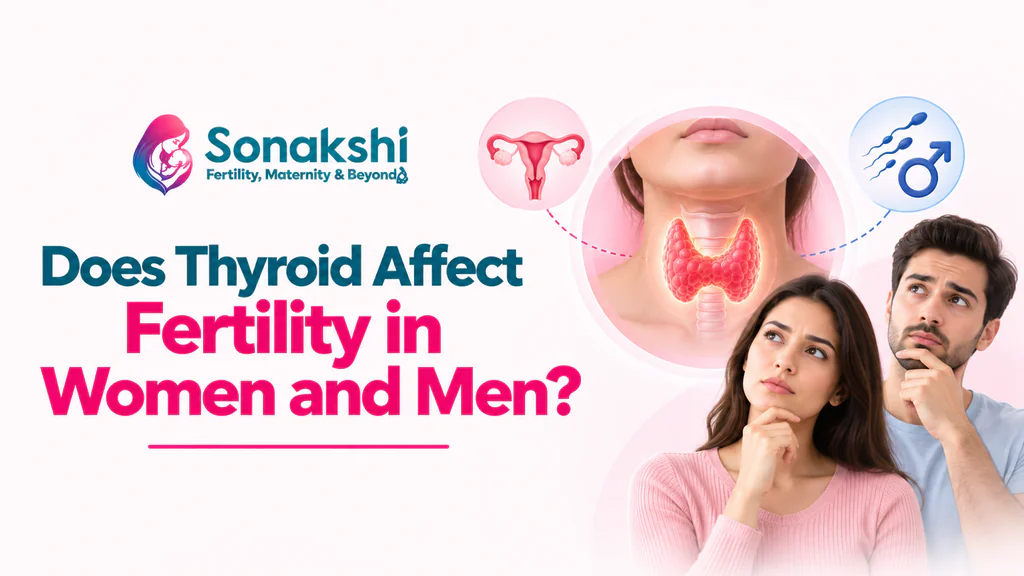
Does thyroid affect fertility? Yes, it can, in women and in men. Most couples don’t expect that. They check sperm count, ovulation, and tubes first, and the thyroid, a small butterfly-shaped gland in the neck, gets forgotten. Quietly.
So let’s go slowly, one piece at a time, like explaining it to a ten-year-old. Along the way, we’ll cover: does thyroid medication affect fertility, does thyroid affect pregnancy, and what happens in men too.
Why Does Thyroid Affect Fertility?
Think of thyroid hormones as a dimmer switch for the body. They control energy, heartbeat, body heat, and the hormones behind periods and sperm production. Too low, and everything slows down. Too high, and everything speeds up and gets messy. That’s why ” Does thyroid affect fertility is one of the most searched questions among couples trying for a baby. The answer isn’t scary, though. Most thyroid problems show up on a simple blood test and are easy to treat.
Does Hypothyroidism Cause Fertility Issues in Women?
Does hypothyroidism cause fertility issues? Often, yes. An underactive thyroid can make periods late, heavy, or missing, and ovulation may stop for months. It can also raise prolactin, a hormone that blocks egg release. Even mild cases, called subclinical hypothyroidism, can lower the chance of conceiving and raise the risk of miscarriage. Thyroid antibodies, called anti-TPO, matter too, even when the main test looks normal.
So does hypothyroidism cause fertility issues every single time? No. Many women with well-controlled thyroid levels conceive naturally.
Does Overactive Thyroid Affect Fertility?
Does overactive thyroid affect fertility? Yes, the opposite problem does the same kind of damage. Too much thyroid hormone can shorten cycles, make bleeding very light, or stop periods altogether. Ovulation becomes irregular, and early pregnancy loss becomes more likely. Signs include weight loss, a racing heart, shaky hands, sweating, and feeling hot all the time. Does an overactive thyroid affect fertility only when it’s severe? Not really. Even moderate cases can disturb the cycle, so don’t wait and watch.
Does Graves Disease Affect Male Fertility?
Men rarely hear this part. Does Graves disease affect male fertility? It can. Graves is an autoimmune condition that causes an overactive thyroid. In men, too much thyroid hormone raises a protein called SHBG, which changes how much testosterone the body can actually use. Sperm movement can drop, sperm shape can change, and desire or erections may suffer. An underactive thyroid in men can lower sperm count too. So, does thyroid affect fertility in men as well? Quietly, yes.
Now the good news. Does Graves disease affect male fertility forever? Usually not. Sperm take around 70 to 80 days to mature, so improvement often shows three to six months after thyroid levels settle.
Does Thyroid Medication Affect Fertility?
Many people worry about this, and honestly, the worry makes sense. Does thyroid medication affect fertility? For the most part, it helps. Levothyroxine, used for low thyroid, replaces the missing hormone and often brings ovulation back to normal. It doesn’t damage fertility.
Medicines for overactive thyroid, like methimazole, are different. Doctors may switch to propylthiouracil in the first months of pregnancy because methimazole is linked with birth defects early on. Never stop or change a dose by yourself. Does thyroid medication affect fertility more than untreated thyroid disease does? No. The untreated condition is usually the bigger risk.
Does Thyroid Affect in Pregnancy?
Does thyroid affect in pregnancy? Yes, and strongly. In the first trimester, the baby depends fully on the mother’s thyroid hormone for brain development. Uncontrolled low thyroid raises the risk of miscarriage, early delivery, and low birth weight. Uncontrolled high thyroid raises the risk of preeclampsia and preterm birth.
Women already on levothyroxine often need a higher dose, sometimes around 25 to 30 percent more, soon after a positive test. The doctor decides the exact change. So does thyroid affect pregnancy enough to test early? Absolutely.
What to Do Next: Tests and Daily Habits
Ask for three tests: TSH, free T4, and anti-TPO antibodies. Many fertility doctors like a TSH below 2.5 when trying to conceive, though your doctor may set a different target for you. Take levothyroxine on an empty stomach, 30 to 60 minutes before breakfast, and keep calcium or iron tablets at least four hours away. Use iodized salt, skip high-dose iodine or kelp supplements, and sleep properly. Both partners should get checked. Small steps, big difference.
The short version, then. Does thyroid affect fertility? Yes. Does hypothyroidism cause fertility issues? It can. Does overactive thyroid affect fertility? It can. Does Graves disease affect male fertility? Sometimes. Does thyroid medication affect fertility? Mostly, it protects it. Does thyroid affect pregnancy? Yes, so treat early. Every time someone asks Does thyroid affect fertility, the real answer is “it can, but it’s fixable.”
This is where a good fertility team matters. At Sonakshi Care, thyroid screening can be part of a wider fertility check, along with other hormones, ovulation tracking, and semen analysis, so nothing gets missed or treated in isolation.
If you’re searching for the best IVF center in Haryana or the best IVF center near me, look for a clinic that tests thyroid before any treatment, explains results in plain words, and keeps tracking your levels during pregnancy. Does thyroid affect fertility enough to change IVF outcomes? It can, so it’s a fair question to ask.
Does Thyroid Affect Fertility: Your Questions Answered
1. Does thyroid affect fertility in women and men equally?
Not exactly equally, but both are affected. In women, the thyroid mostly disturbs ovulation and periods. In men, it changes sperm count, movement, and testosterone use. So when people ask, does thyroid affect fertility, the honest answer is that it touches both partners, and testing both saves time.
2. Does hypothyroidism cause fertility issues even if my TSH is only slightly high?
It can. Slightly high TSH, called subclinical hypothyroidism, may still lower the chance of conceiving and raise miscarriage risk, especially with positive anti-TPO antibodies. Does thyroid affect fertility at mild levels? Sometimes, which is why doctors often treat early when you’re trying for a baby.
3. Does thyroid medication affect fertility or harm the baby?
Levothyroxine is considered safe and is the same hormone your body makes. It supports both conception and pregnancy. Does thyroid affect fertility less once treated? Usually yes. The medicines that need care are the ones for overactive thyroid, and your doctor will adjust them before or early in pregnancy.
4. Does Graves disease affect male fertility, and can it be reversed?
It can lower sperm movement and change sperm shape. Often it improves after treatment brings hormone levels to normal, usually within three to six months. A semen analysis after that gives a clear picture. Does thyroid affect fertility in men permanently? In most cases, no.
5. Does overactive thyroid affect fertility, and can I still get pregnant?
Yes, it can affect fertility, but pregnancy is still possible, especially once levels are controlled. Doctors usually advise getting stable before trying, because high thyroid levels raise risks for mother and baby. Does thyroid affect fertility less after treatment? In most cases, it does.
6. Does thyroid affect pregnancy after I conceive?
Yes. The baby’s brain and nervous system rely on your thyroid hormone, mainly in the first trimester. Levels are usually checked every four to six weeks early on. Does thyroid affect fertility only before conception? No, it keeps mattering through pregnancy and after delivery.
This article is for general education and isn’t a replacement for medical advice. Please speak to your doctor before changing any medicine.


