
What Is an AMH Test and What Do the Results Mean?
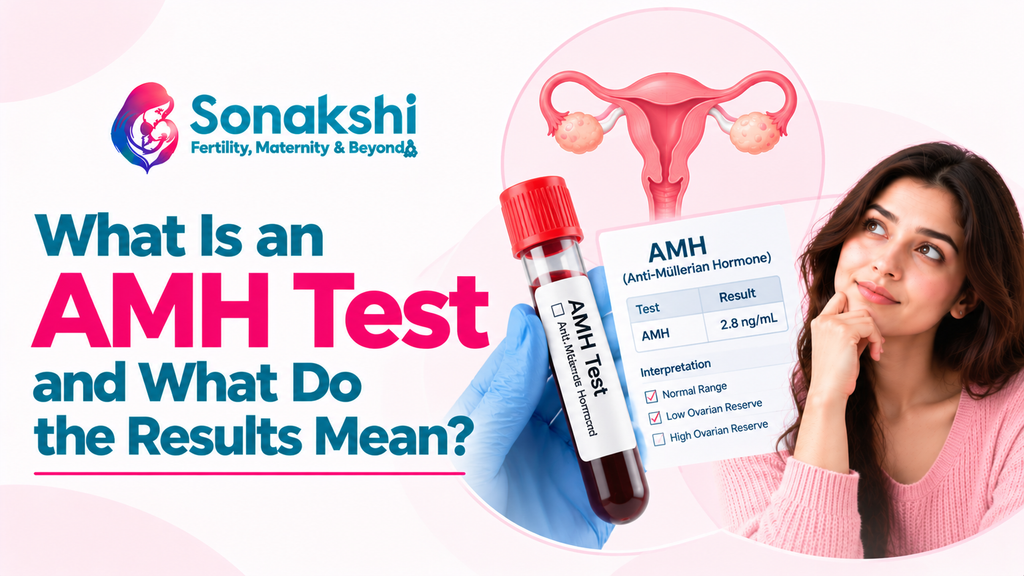
A woman sits in a clinic waiting room, holding a lab report. One small number is printed on it. She doesn’t know what it means, yet it feels heavy. Very often, that number comes from an AMH test, one of the most requested checks in modern reproductive care. Let’s slow down and understand it properly.
What Exactly Is an AMH Test?
AMH stands for Anti-Mullerian Hormone. Tiny follicles inside the ovaries make it, and each follicle holds an egg waiting for its turn. An AMH test is a simple blood draw that measures how much of this hormone is in your blood. That number gives doctors a rough idea of your ovarian reserve, meaning how many eggs you probably have left.
Why the AMH Test Counts as a Fertility Test
Picture your ovaries as a savings account. You are born with a fixed balance of eggs. No new ones are added, ever. Over the years, the balance drops. This fertility test checks the balance, not the quality of each egg. Remember that. It matters later.
The practical side is easy. You can do an AMH test on any day of your cycle, because the hormone stays fairly steady from month to month. No fasting. Results usually come within a day or two.
What Are Normal AMH Levels?
Labs use different units, so always follow the range printed on your own report. Still, doctors often use rough bands in ng/mL. Below 0.5 is very low. Between 0.5 and 1.0 is low. From 1.0 to 3.5 is considered normal. Above 3.5 is high.
Age changes the picture. AMH levels peak in the mid-twenties and slowly fall until menopause. So a 28-year-old and a 40-year-old with the same number are not in the same situation. Doctors always read the result next to your age.
What a Low Result Says About Your Ovarian Reserve
Low AMH levels point to a smaller ovarian reserve. Not zero eggs. Not no chance. Many women with low numbers still conceive naturally, because one healthy egg each month is all it takes. What a low number does suggest is less time to wait, and fewer eggs to collect if IVF is planned. Doctors may move faster with treatment, or talk about egg freezing for younger women.
When AMH Levels Come Back High
A high number sounds like good news, and often it is. But high AMH levels are also common in polycystic ovary syndrome, or PCOS, where many small follicles sit in the ovaries yet may not release eggs regularly. In IVF, a high value also raises the risk of overstimulation, so doctors adjust medicine doses carefully.
What an AMH Test Cannot Tell You
Here is the part people miss. An AMH test shows ovarian reserve, not egg quality. It cannot predict whether you will conceive this month. It says nothing about open tubes or your partner’s sperm health. Think of it as one page of a book, not the whole book. Doctors combine it with an antral follicle count on ultrasound, other hormone checks, and your medical history. Hormonal birth control, ovarian surgery, chemotherapy, and smoking can also nudge the number.
Who Should Get an AMH Test?
Women over 30 who are planning pregnancy. Women who have tried for a year without success, or six months if they are over 35. Anyone with irregular periods, endometriosis, or a family history of early menopause. Women who want to freeze their eggs. A fertility test like this is routine before IVF too. Knowing your ovarian reserve early gives you options, not pressure.
Choosing the Best IVF Center in Haryana for Your Results
Once the report is in your hand, the next question is who reads it with you. Many couples search for the best IVF center in Haryana, or type best IVF center near me, and get buried in choices. A good clinic explains every fertility test result in plain words, never pushes treatment based on a single number, and shares honest success rates for your age group. Ask for that. Ask about the doctor’s experience too.
At Sonakshi Care, the approach is to read an AMH test alongside scan findings, age, and medical history before suggesting any path, whether that is timed cycles, IUI, or IVF. If you want your AMH levels explained by a specialist, a consultation is the simplest first step.
One number does not decide your story. It is a starting point, a quiet push to ask better questions. Take the test, sit with a doctor, and let your ovarian reserve guide planning, not fear. A fertility test is information. Nothing more, nothing less.
Frequently Asked Questions
1. Is the AMH test painful?
Not really. It is a normal blood draw, so you feel a quick pinch. The AMH test takes only a few minutes, needs no fasting, and most labs share results within one to two days.
2. Do I need to pick a particular cycle day?
No. Unlike some hormone checks that must be done on day two or three of your period, AMH stays steady through the month. This fertility test can be done on any day that suits you.
3. Can AMH levels be increased?
Honestly, no proven method raises them much. A healthy weight, no smoking, balanced food, and managing stress protect general ovarian health. Be careful with supplements that promise big jumps, and ask your doctor first.
4. Can I get pregnant naturally with a low result?
Yes, many women do. A low ovarian reserve means fewer eggs, not zero chance of one good egg. Age and egg quality matter more, so a doctor may still advise not waiting too long.
5. How accurate is an AMH test?
As a fertility test, the AMH test measures the hormone reliably, but it cannot predict pregnancy. Values can differ slightly between labs, so repeat tests at the same lab for a fair comparison.
6. How often should I repeat an AMH test?
If your first result is normal and nothing changes, once a year is often enough. If it was low, or you are starting treatment, your doctor may repeat the AMH test sooner. Tell them if you recently started or stopped birth control.


