
OHSS Symptoms After IVF: What Ovarian Hyperstimulation Syndrome Feels Like and How It Is Treated
Nobody warns you about the bloating. Or maybe they do, once, quickly, between consent forms. Then the injections start, your belly feels tight, and a small voice asks: is this normal? Mostly, yes. Sometimes, no. The difference is knowing your OHSS symptoms early.
OHSS stands for ovarian hyperstimulation syndrome. Among all IVF complications, it is the one people whisper about in forums at midnight. This guide covers OHSS after IVF in plain words: what it feels like, why it happens, and what doctors do about it.
What Is Ovarian Hyperstimulation Syndrome, Really?
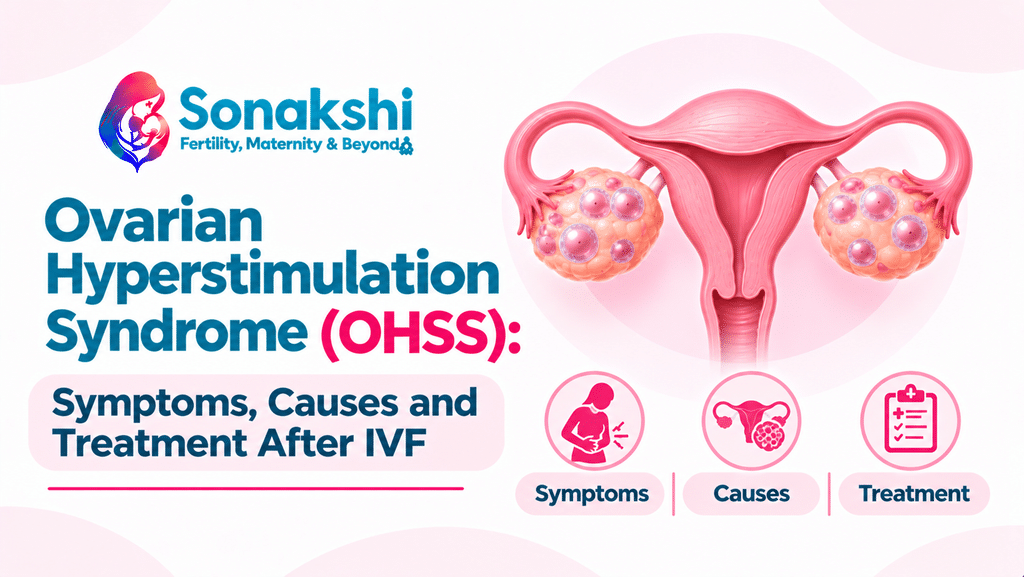
Picture your ovaries as two small gardens. Fertility injections are the fertiliser. Too much, and the garden overgrows. Lots of follicles grow, the ovaries swell, and fluid leaks from blood vessels into the belly, sometimes the chest. That leak sits behind nearly all OHSS symptoms. The hCG trigger shot often triggers it. And if you get pregnant, your own hCG keeps the fire going a little longer.
How common is it? About one in three women get some mild signs during stimulation. Moderate or severe OHSS affects about one in a hundred, and modern protocols have pushed those numbers down. Mild is common. Severe is rare. Rare, but real.
Some ovarian stimulation side effects are normal: light bloating, sore breasts, mood swings. OHSS is a step further. OHSS is also not the only one of the IVF complications doctors watch for, but it is the one you can learn to spot at home.
OHSS Symptoms From Mild to Severe
Start gentle. Mild OHSS symptoms mean bloating, belly discomfort, a full feeling, nausea, loose stools or constipation, and slight weight gain. The tricky part is that egg collection causes some of this too. So watch the direction. Better each day, fine. Worse each day, call. Mild OHSS symptoms can appear while stimulation is still going on, and most fade within a week or two.
Moderate cases start like mild OHSS symptoms but grow stronger: more pain, visible swelling, more nausea, weight creeping up. These OHSS symptoms can often still be managed at home with close checks.
Now the list worth memorising. These are the OHSS symptoms that matter most. Signs of severe OHSS include weight gain of more than 1 kg (about 2.2 pounds) in a day, strong belly pain or a hard, swollen belly, vomiting that will not stop, very little or dark urine, shortness of breath, red, swollen, painful legs, and chest pain. Any of these needs a doctor the same day. Not tomorrow. Today.
Timing matters too. OHSS symptoms usually start within a week of the trigger shot and peak around six to eight days later. With pregnancy, they can start later and last two to three weeks or more.
Who Is Most at Risk of OHSS After IVF?
Risk rises with PCOS, younger age, high AMH or many small follicles on the scan, a very high estrogen level before the trigger, a past episode, and twin or multiple pregnancy. A risk factor is not a verdict. It just tells your doctor to plan with extra care, because ovarian hyperstimulation syndrome is far easier to prevent than to fix.
How Doctors Reduce the Risk of Severe OHSS
Prevention is where good care shows. Doctors may use gentler doses, an antagonist protocol, a GnRH agonist trigger instead of hCG, or a medicine called cabergoline. Or they freeze all embryos and transfer later, letting the ovaries rest. In very high-risk cycles, treatment may be paused. These steps lower ovarian stimulation side effects and make OHSS after IVF much less likely. Preventing IVF complications like this is part of planning, not an afterthought.
OHSS Treatment at Home and in Hospital
Bluntly: no medicine switches it off. OHSS treatment is about comfort, fluids, and safety while the body settles.
For mild and moderate cases, care happens at home. Rest, no heavy exercise, plenty of fluids (electrolyte drinks help), paracetamol for pain. Avoid ibuprofen-type painkillers, as they can strain the kidneys. Weigh yourself daily, measure your waist, and track how often you pass urine. Your clinic will usually check scans and blood tests every few days, and you keep taking progesterone if prescribed. Most ovarian stimulation side effects pass quietly during this time. This simple home OHSS treatment is enough for most people with mild OHSS symptoms.
Severe OHSS means hospital. Doctors give IV fluids, check blood often, may use blood thinners to prevent clots, and sometimes drain fluid from the belly or chest. Most people with OHSS after IVF recover fully, and an ongoing pregnancy usually continues normally. Good OHSS treatment works.
When OHSS Symptoms Mean Call Now
Call your clinic immediately if you gain over 1 kg in a day, cannot keep fluids down, urinate very little, feel breathless, or have chest pain. These OHSS symptoms are never “wait and see”. Mild OHSS symptoms that suddenly get worse deserve the same call, and severe OHSS can build quietly, so trust your gut. If you notice OHSS after IVF worsening at night, phone anyway. Save your clinic’s emergency number before the trigger shot, not after.
Choosing a Care Team You Can Trust
At midnight, many people type “best IVF center in Haryana” or “best IVF center near me” into Google. Fair. But best is not about a shiny lobby. Ask a few simple things. Do they monitor with scans and hormone tests during stimulation? Do they explain OHSS risk before you begin? Do they offer freeze-all cycles and alternative triggers? Is there an after-hours number? Which OHSS treatment plan do they follow? And what is their approach to ovarian stimulation side effects? Honest answers cut IVF complications a great deal.
If you want to talk through your own cycle, the team at Sonakshi Care can explain monitoring, your personal risk, and how ovarian hyperstimulation syndrome is handled. Bring your questions. All of them. Ask about other IVF complications too.
FAQs
1. What are the first OHSS symptoms after egg collection?
Usually bloating, belly pressure, nausea, and quick weight gain, two to seven days after the trigger. These mild OHSS symptoms are often confused with normal recovery. If they ease daily, relax. If they grow, tell your clinic. Early OHSS symptoms are easy to manage when caught early.
2. How long do OHSS symptoms last?
Usually one to two weeks. With pregnancy, ovarian hyperstimulation syndrome can last two to three weeks or longer, then fade. Severe OHSS may need a longer hospital recovery, but the pregnancy itself usually carries on normally.
3. Can OHSS after IVF harm my baby?
Mild and moderate cases are not known to harm the pregnancy. Severe OHSS needs quick treatment, as it can strain the kidneys, lungs, and blood flow. Tell every doctor you meet that you had OHSS after IVF, including at your first antenatal visit.
4. Is OHSS treatment possible at home?
For mild and moderate cases, yes. OHSS treatment at home means rest, fluids, paracetamol, daily weights and urine tracking, with regular clinic check-ins. Go to hospital if vomiting, breathlessness, tiny urine amounts, or fast weight gain appear.
5. How do I tell normal ovarian stimulation side effects from OHSS?
Normal ovarian stimulation side effects are mild and steady: slight bloating, tender breasts, tiredness. OHSS symptoms climb: pain increases, weight jumps, urine drops. Rule of thumb: worse every day means call your doctor.
6. Can ovarian hyperstimulation syndrome happen again, and what other IVF complications exist?
Yes, a past episode raises the risk, so tell your doctor. A freeze-all cycle or a different trigger usually helps. Other IVF complications include infection, bleeding after egg collection, multiple pregnancy, and ectopic pregnancy. They are uncommon, yet worth knowing.


