
What Is Blastocyst Transfer in IVF? Process, Benefits, and Success Factors
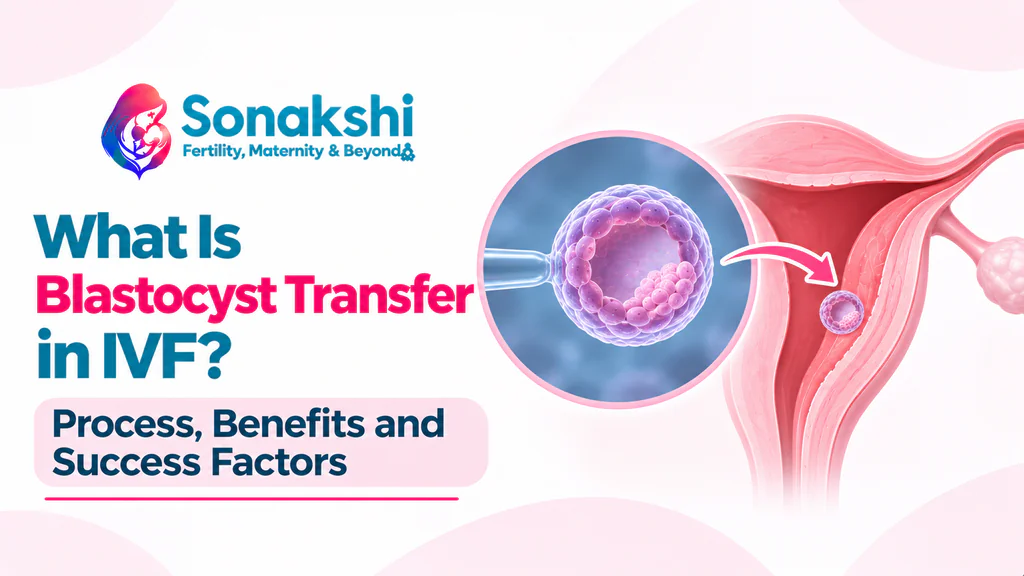
Ask anyone in the middle of fertility treatment what confuses them most, and the answer is usually timing. Which day? Why that day? Blastocyst transfer sounds like a heavy medical phrase, but the idea is simple. The embryo grows in the lab for five or six days, and only then goes into the womb. Not two days. Not three. Five. That is a day 5 embryo transfer in plain words, and the rest is detail, though the detail matters a lot.
What Is a Blastocyst Embryo, Really?
A blastocyst embryo is an embryo that has grown to a more advanced stage. After an egg is fertilised, it divides repeatedly. By day 5, it becomes a tiny ball of around 100 cells with a fluid-filled space inside. One group of cells will become the baby. The other will become the placenta. Think of a seed that has finally shown which part is root and which part is leaf.
This whole journey is called IVF embryo development, and it is slow. Not every fertilised egg makes it this far. That sounds sad at first, but it is useful, because an embryo that survives to day 5 has already passed a natural test.
How Blastocyst Development Happens, Day by Day
Blastocyst development follows a clear path. On day 1, the egg and sperm have joined. By day 2, there are about four cells, and by day 3, about eight. On day 4, the cells pack tightly together, like a small mulberry. Then on day 5 or 6, a cavity opens inside, and the blastocyst appears. All of this IVF embryo development happens inside an incubator that copies the warmth and gas levels of the human body.
Embryologists check the embryos every day. Good blastocyst development can be seen under a microscope, and that is exactly why clinics trust this stage when making decisions.
Day 3 vs Day 5 Embryo Transfer: What Actually Changes?
People ask about day 3 vs day 5 embryo transfer all the time, and it is a fair question. On day 3, the embryo is still early, so doctors cannot be fully sure which ones will keep growing. IVF embryo development is not a straight line. By day 5, the weaker ones have often stopped, so a blastocyst embryo is far easier to judge, and blastocyst development itself acts like a filter. In a day 3 vs day 5 embryo transfer comparison, the later option usually gives more information and a better chance per embryo. But no, not always. If only one or two embryos exist, a day 3 transfer may be safer, because waiting could mean losing them.
A day 5 embryo transfer also matches nature. In natural conception, the embryo reaches the womb around day 5, so the womb and the embryo are in step.
The Blastocyst Transfer Process, Step by Step
Here is how blastocyst transfer usually goes in a clinic.
- Ovarian stimulation. Injections help several eggs mature over roughly 10 to 12 days, with scans and blood tests along the way.
- Egg retrieval. A short procedure under sedation, usually about 20 minutes.
- Fertilisation and lab growth. Eggs and sperm are combined, and the team tracks IVF embryo development for five to six days.
- Grading. On day 5, each blastocyst embryo is scored on how much it has expanded and how healthy the inner and outer cells look. You may hear scores like 4AA. Higher is better.
- The transfer. A thin, soft tube places the embryo into the womb under ultrasound. It takes a few minutes, and most women need no anaesthesia.
After a day 5 embryo transfer, you rest, keep taking the prescribed medicines, and wait around nine to fourteen days for a pregnancy blood test. Many clinics now freeze every blastocyst and transfer it in a later cycle, so the womb is calm and ready. That is frozen blastocyst transfer, and it is quite common today.
Benefits of Blastocyst Transfer You Should Know
The benefits of blastocyst transfer are practical, not magical. Better selection is the big one, since only embryos that survive to this stage are chosen. Better timing is another, because a day 5 embryo transfer gives the lining and the embryo the same schedule and helps embryo implantation. Many clinics also find a single blastocyst embryo is enough, which lowers the chance of twins or triplets and the risks that come with them. If genetic testing is needed, day 5 is also when a few cells can be safely sampled.
Is there a downside? A small one. Some cycles produce no blastocyst at all, and then there is nothing to transfer. That is hard news. But it also tells the doctor something useful about the next plan.
Blastocyst Transfer Success Rate: What the Numbers Really Say
The blastocyst transfer success rate depends mostly on age. For women under 35, many clinics report live birth rates of roughly 40 to 60 percent per transfer. After 40, the figure falls, often below 20 percent. These are broad ranges, not promises. A fair blastocyst transfer success rate also depends on embryo grade, womb lining, hormone support, and lab quality. Anyone quoting one fixed number for everybody should make you pause.
Embryo Implantation: The Quiet Moment That Decides Everything
Embryo implantation is the moment the blastocyst hatches out of its outer shell and attaches to the womb lining. It usually happens six to ten days after fertilisation. A lining around 7 to 8 millimetres thick, steady progesterone, and a well-graded embryo all help. Sometimes embryo implantation fails even when everything looks perfect, and honestly, science does not have every answer yet. Doctors may then check the womb for polyps or fibroids, or test thyroid and immune markers.
Success Factors You Can Actually Influence
Some things are out of your hands, like age. Others are not. Sleep well. Avoid smoking and heavy alcohol use. Keep weight in a healthy range. Keep thyroid and blood sugar under control. Follow the medicine schedule exactly. Stress does not cause failure, so please do not blame yourself, but gentle routines like walking help you cope with the wait. Good embryo implantation depends on a healthy body as much as a good embryo, and even a top-graded blastocyst embryo needs a ready womb. Each of these nudges the blastocyst transfer success rate a little. Each cycle of IVF embryo development also teaches the team something, so ask for your embryo grades and keep a record.
Choosing the Right Clinic
When people search for the best IVF center in Haryana‘, they often compare success numbers alone. Look wider. Ask about the embryology lab, how they monitor blastocyst development, and how they handle IVF embryo development day to day. Ask which of day 3 vs day 5 embryo transfer they recommend for you, and why. Many people also type best IVF center near me, which is sensible, since you will visit often for scans. Closer is easier, as long as lab quality is strong.
If you want a place to start asking questions, Sonakshi Care is one option for IVF and fertility consultation. Ask what a blastocyst transfer plan would look like for your age and history, and what your own blastocyst transfer success rate could realistically be. A good clinic welcomes those questions.
So, back to the first question. Which day? Honestly, the day 3 vs day 5 embryo transfer answer is not the same for everyone. For many couples, though, a day 5 embryo transfer gives the embryo, and the doctor, the clearest picture. Ask questions. Ask again. It is your journey, and you deserve plain answers.
Frequently Asked Questions
1. What is blastocyst transfer in simple words?
Blastocyst transfer means placing an embryo that is five or six days old into the womb. By this age, a blastocyst embryo has around 100 cells and has split into two parts, one for the baby and one for the placenta. Doctors like it because only stronger embryos usually reach this stage, so choosing the best one becomes easier. The procedure is quick, painless for most women, and done under ultrasound guidance.
2. Day 3 vs day 5 embryo transfer: which one is better?
A day 5 embryo transfer is often better, but not always. It lets doctors see which embryos keep growing, so the strongest is chosen, and it matches the natural timing of the womb. In the day 3 vs day 5 embryo transfer debate, day 3 can still be wiser when very few embryos exist, since some may not survive two more days in the lab. Your doctor will look at your age, egg count, and past cycles before advising.
3. What is the blastocyst transfer success rate, and what changes it?
The blastocyst transfer success rate is not one fixed number. For women under 35, it is often reported near 40 to 60 percent per transfer, and it falls with age. Embryo grade, womb lining, uterine health, and lab quality all matter. Genetic testing of the embryo can help with selection for older women or those with repeated losses. Always ask a clinic for its own data, grouped by age.
4. Does blastocyst development always happen, and what if no embryo reaches day 5?
No. Blastocyst development is a natural filter, and some cycles end with no embryo reaching it. Egg quality, sperm factors, or plain chance can be the reason. It does not mean you did something wrong. Your doctor may change the medicines, try a different protocol, or suggest a day 3 transfer next time. Many couples succeed after adjustments.
5. How soon does embryo implantation happen, and what will I feel?
Embryo implantation usually starts within a day or two after a day 5 embryo transfer and finishes in a few days. Some women notice light spotting or mild cramps, but many feel nothing, and neither means success or failure. The only reliable answer is the blood test, around nine to fourteen days after transfer. Early home tests can mislead, so please wait.
6. Is blastocyst transfer painful or risky, and do I need bed rest?
Blastocyst transfer is usually a day care procedure, and most women feel only mild pressure, similar to a routine pelvic test. Risks are small, such as cramping, spotting, or a multiple pregnancy if more than one embryo is placed—good IVF embryo development in the lab and careful single embryo selection lower those risks. Strict bed rest is not needed. Light daily activity is fine, but avoid heavy lifting and follow your doctor’s advice.


