
Egg Retrieval in IVF: Procedure, Recovery, Pain, and What to Expect
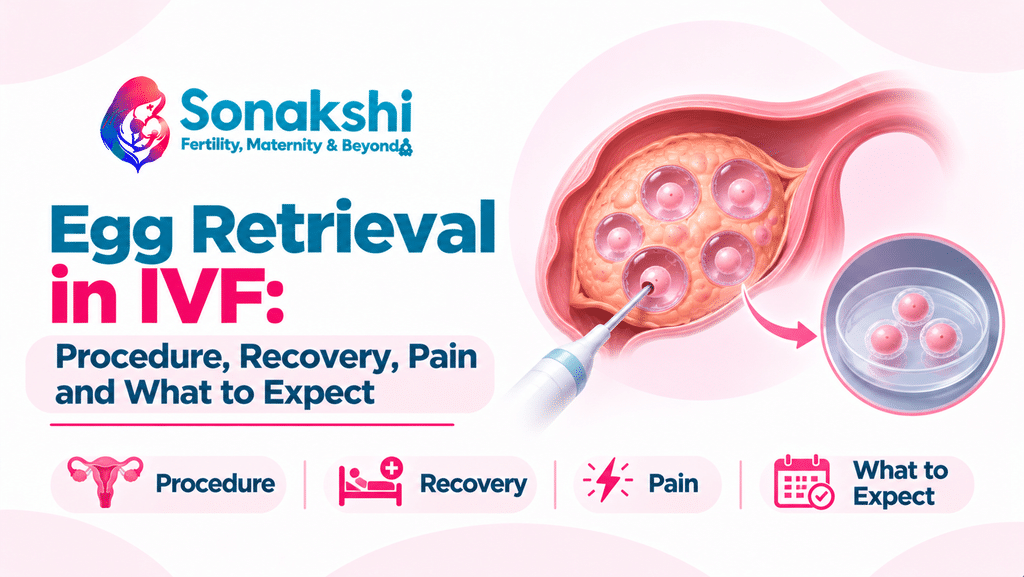
Egg retrieval in IVF is the step most women lose sleep over. Not the injections, not the waiting. This one. A needle, an ultrasound screen, a few minutes under sedation. So here is how it actually goes, told slowly, the way you’d explain it to a friend who is scared but pretending not to be.
What Is Egg Retrieval in IVF, Really?
Picture your ovaries after ten days of hormone injections. They are crowded with follicles, tiny fluid-filled sacs, and each one may hold a single egg. Egg retrieval in IVF is the day a doctor gathers those eggs so they can meet sperm in the lab. Some people call it IVF egg collection. Others say egg pickup procedure. Same thing, different names, so don’t let the words confuse you. The whole egg retrieval process exists for one reason: to give the lab enough eggs to make healthy embryos.
The Egg Retrieval Process, Step by Step
It starts well before the day itself. You take injections, go for scans, and give blood samples. When follicles reach about 18 to 20 millimetres, you get a trigger shot. Timing is everything here. IVF egg collection is booked around 34 to 36 hours after it, because the eggs need that window to finish growing, and they must be picked up before the body releases them on its own.
Fasting comes next, usually six to eight hours with no food or water. Wear loose clothes, bring a family member, follow your clinic’s instructions exactly. Then you lie down, sedation goes in through a drip, and you drift off. A doctor guides a thin ultrasound probe into the vagina, passes a fine needle alongside it, and gently draws fluid from each follicle. In the next room, an embryologist checks the fluid under a microscope and identifies the eggs. No cuts. No stitches. The full egg pickup procedure usually takes 15 to 30 minutes. Shorter than most people imagine, honestly.
Mature Eggs in IVF: Why Not Every Egg Counts
Here is something clinics don’t always explain early. Not every egg collected is ready. Mature eggs in IVF are the ones that have finished their final division, often called MII eggs, and only these can be fertilised. So if you hear that 12 eggs were collected and 9 were mature, that’s a good report. The number of mature eggs in IVF depends on age, ovarian reserve, and how you responded to medicines. Quality matters more than quantity. Comparing your count with a stranger’s in an online group? Please don’t.
Pain After Egg Retrieval: Honest Answers
You won’t feel the needle, since you’re sedated. Afterwards is another matter. Most women describe cramps like a heavy period, some bloating, light spotting, and deep tiredness. Pain after egg retrieval is usually mild to moderate and settles within a day or two. Your doctor may suggest paracetamol. Ask before taking any other painkiller. A warm compress on the lower belly often helps. Severe pain after egg retrieval, though, is different, and we’ll get to that.
Egg Retrieval Recovery: The First 48 Hours
Egg retrieval recovery is mostly about rest. You’ll stay at the clinic for an hour or two, then go home with someone else driving. Walk gently, drink plenty of fluids, and eat small meals. Many women return to desk work in a day or two. Skip heavy exercise, swimming, and intercourse until your doctor says yes, because the ovaries are still enlarged and can twist. Good egg retrieval recovery also means listening to your body. The next morning, the embryologist calls to say how many eggs were fertilised. Embryos then grow for three to five days before transfer or freezing.
Egg Retrieval Complications: Rare, But Know the Signs
Egg retrieval complications are uncommon, and serious ones are rarer still. They include light bleeding, infection, a reaction to anaesthesia, ovarian hyperstimulation syndrome (OHSS) and, very rarely, injury to nearby organs. OHSS happens when the ovaries overreact to medicines, causing rapid bloating, weight gain, nausea and less urine. Call your clinic straight away for a fever above 38 degrees, severe pain that medicines don’t ease, heavy bleeding, fainting, or trouble breathing. Knowing the early signs of egg retrieval complications means you act early, not late.
Choosing a Clinic for Egg Retrieval in IVF
Sonakshi Care is one fertility centre in Haryana where couples can sit down, ask their questions, and understand each step of egg retrieval in IVF before it begins. Bring your list. Ask who performs the procedure, how the lab handles eggs, and what happens if something feels wrong at night.
Many couples type best IVF center in Haryana or best IVF center near me into Google, and that’s fair. But look past the ranking. Check the doctors’ experience, the embryology lab, honest success rates, clear costs, and how fast the team answers after egg retrieval in IVF. A good centre makes you feel informed, not rushed.
Before You Walk In
Whether it’s your first IVF egg collection or your third, the nerves don’t fully vanish, and that’s okay. Know the egg retrieval process, respect your egg retrieval recovery, and watch for pain after egg retrieval and any egg retrieval complications. Remember that mature eggs in IVF are what matter most, and the egg pickup procedure itself is brief. Ask your doctor everything. After the IVF egg collection, be gentle with yourself. Egg retrieval in IVF is a big day, but it is one day.
Egg Retrieval in IVF: Your Questions Answered
1. Is egg retrieval in IVF painful, and how long does pain after egg retrieval last?
During the egg pickup procedure, no. Egg retrieval in IVF is done under sedation, so most women sleep through it and remember very little. Afterwards, the cramps feel like a heavy period, with pressure low in the belly. This pain after egg retrieval normally fades within one to two days, and a warm compress and rest help. If pain after egg retrieval grows worse instead of better, or arrives with fever, vomiting, or dizziness, call your clinic that same day.
2. How long does the egg retrieval process take, and what is the egg pickup procedure like?
The egg retrieval process itself takes about 15 to 30 minutes, though you’ll spend two to three hours at the clinic, including check-in and waking up. During the egg pickup procedure, an ultrasound-guided needle reaches each follicle and draws out the fluid. Nothing is cut. Most clinics ask your partner for a sperm sample the same morning, so egg retrieval in IVF flows straight into fertilisation in the lab.
3. How many mature eggs in IVF are considered enough?
There is no single magic number. Research often links roughly 10 to 15 eggs retrieved with the best odds, but how many mature eggs in IVF you get depends on your age, hormone levels, and response to medicine. Fewer mature eggs in IVF isn’t failure, because one good egg can become one good embryo. Your doctor reads the numbers alongside your history, and the egg retrieval process is only the first part of that story. Egg retrieval in IVF gives the numbers, and the lab turns them into embryos.
4. How long does egg retrieval recovery take, and when can I go back to work?
Most women feel nearly normal within two to three days. Egg retrieval recovery goes better if you rest on day one, drink plenty of fluids, and avoid lifting. Light desk work is often fine after a day or two, but heavy workouts should wait until your doctor approves. Bloating can linger for a week while the ovaries shrink back. Patient egg retrieval recovery matters more than speed, and egg retrieval in IVF is not a race.
5. How safe is egg retrieval in IVF, and what are the possible egg retrieval complications?
Most women sail through egg retrieval in IVF without trouble. Spotting, bloating, and mild cramps are expected, not egg retrieval complications. The real egg retrieval complications, such as OHSS, infection, heavy bleeding or a reaction to anaesthesia, are uncommon. Call your clinic if you gain weight fast, pass very little urine, feel breathless, run a fever above 38 degrees, or soak a pad in an hour. The egg retrieval process is closely monitored, and early treatment usually settles problems without lasting harm.
6. What should I do before IVF egg collection?
Follow your fasting rules, usually no food or water for six to eight hours. Take only medicines your doctor has approved, arrange a companion and a ride home, remove nail polish and jewellery, and wear loose clothes. Arrive on time, because IVF egg collection is timed to the trigger shot and the schedule is exact. Confirm the sperm sample, consent forms, and pain relief plan too. The egg pickup procedure is short, so most of the preparation is really about staying calm. After IVF egg collection, plan a slow, lazy day.


