
Endometriosis Infertility IVF: What Every Woman Trying to Conceive Should Actually Know
There’s a particular kind of quiet confusion that comes with hearing the words endometriosis and infertility in the same sentence. You weren’t expecting it. Maybe the pain was always dismissed as “just bad periods.” And now suddenly you’re reading about endometriosis, infertility, IVF at midnight, trying to understand what any of it actually means for your body, your future, your family.
Let’s slow down and go through this properly.
So, What Is Endometriosis, Really?
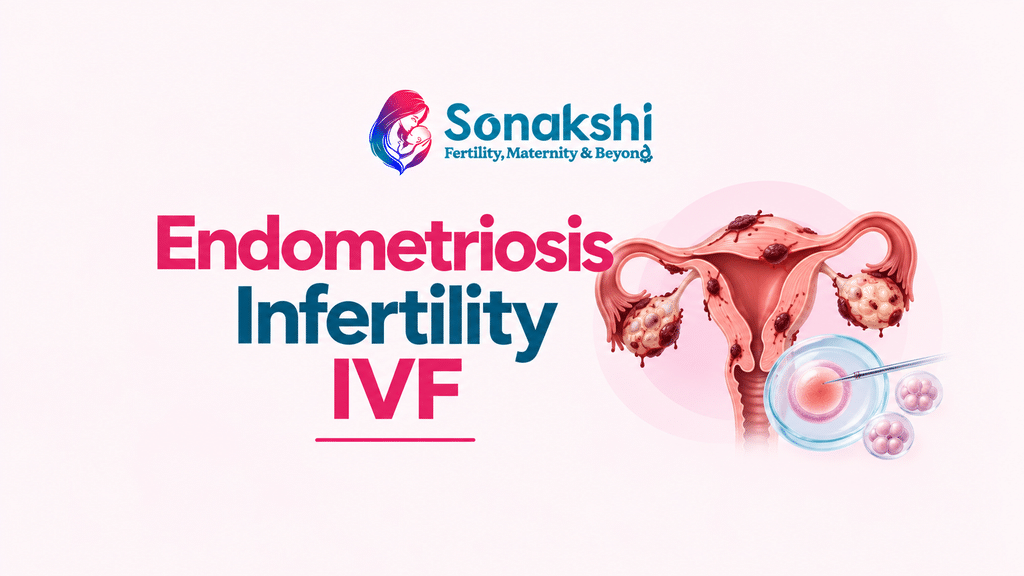
Endometriosis happens when tissue similar to the lining of the uterus starts growing outside it, on the ovaries, the fallopian tubes, sometimes even the bladder or bowel. Every month, this tissue behaves the way it would inside the uterus. It thickens. It bleeds. Except it has nowhere to go. That’s what causes the inflammation, the scarring, and yes, the pain that so many women are told to just “manage.”
Can endometriosis cause infertility? Often, yes. Not always, but often enough that doctors take it seriously. The scar tissue can block tubes, distort the ovaries, or quietly damage egg quality over time. This is where the conversation around endometriosis and infertility usually begins, and honestly, it should begin much earlier than it does for most women.
Why Endometriosis Infertility IVF Conversations Are Becoming So Common
Fertility clinics across India, and especially clinics working closely on endometriosis infertility treatment, are seeing more women in their late twenties and early thirties come in already diagnosed, or suspecting something is wrong. The rise isn’t necessarily because endometriosis is more common now. It’s probably that awareness has finally caught up. Women are asking questions their mothers never got to ask.
When natural conception doesn’t happen after months of trying, and endometriosis and IVF get mentioned together, it’s not a failure. It’s a next step. A reasonable one.
Diagnosis: The Part Nobody Explains Well Enough
Diagnosis is where a lot of women get stuck, and I mean genuinely stuck, for years sometimes. An ultrasound might show cysts. A laparoscopy, a small surgical procedure, remains the most reliable way to confirm endometriosis directly. Blood tests alone rarely tell the full story here.
Doctors typically look at symptom history too: painful periods, pain during intercourse, chronic pelvic pain, unexplained fatigue. If you’ve been told your pain is normal for years, it probably wasn’t. That’s not meant to scare anyone. It’s meant to validate what a lot of women already suspected quietly.
Treatment Options Before IVF Even Enters the Picture
Not every case of endometriosis needs IVF for endometriosis immediately. Mild cases sometimes respond to hormonal treatment, pain management, or laparoscopic surgery to remove the excess tissue. Some women conceive naturally after surgery. Some don’t, and that’s where fertility treatment becomes the honest, practical path forward.
Endometriosis fertility treatment usually starts conservatively and moves forward step by step, monitoring ovulation, sometimes trying IUI first if the tubes are healthy enough. It’s rarely a straight line. It’s more like a series of decisions, each one based on what the last step revealed.
When IVF Becomes the Right Conversation
For moderate to severe endometriosis, especially when tubes are blocked or egg reserve has dropped, endometriosis infertility IVF treatment often becomes the most direct route to pregnancy. IVF bypasses the damaged tubes entirely. Eggs are retrieved directly from the ovaries, fertilised in a lab, and the resulting embryo is transferred into the uterus.
The honest question everyone asks next is about the endometriosis IVF success rate. It varies, genuinely. Age, severity of the condition, ovarian reserve, and the clinic’s own protocols all play a role. Severe endometriosis can lower egg yield during retrieval. But lower isn’t the same as impossible. Many women with significant endometriosis still go on to have healthy pregnancies through IVF, sometimes needing more than one cycle, sometimes not.
This is exactly why choosing the right endometriosis infertility treatment partner matters so much, not just the technology, but the actual people reading your case and adjusting the plan as they go.
Why Location and Expertise Both Matter Here
If you’re in North India and researching this seriously, you’ve probably already come across clinics claiming to be the best IVF center in Haryana. It’s worth being a little skeptical of marketing claims and looking instead at things that actually matter: embryology lab standards, doctor experience specifically with endometriosis cases, transparent success rate reporting, and how much time a clinic actually spends explaining your case rather than rushing you through it.
Sonakshi IVF Center has built its approach around exactly that kind of patient-first, endometriosis-aware fertility care, treating each case as genuinely individual rather than running everyone through the same protocol. When the condition is as unpredictable as endometriosis, that individual attention isn’t a luxury. It’s necessary.
The Emotional Side Nobody Puts in the Brochure
There’s grief in this journey that doesn’t get spoken about enough. The waiting. The cycles that don’t work. The questions from relatives who don’t understand why “just relaxing” isn’t the answer. If you’re in the middle of this right now, you’re allowed to feel exhausted by it. That doesn’t mean you’re doing anything wrong.
Frequently Asked Questions
Does every woman with endometriosis need IVF to get pregnant?
No. Many women with mild endometriosis conceive naturally or with simpler treatments like ovulation induction or IUI. IVF becomes relevant when tubes are damaged, egg reserve is low, or other treatments haven’t worked after a reasonable trial period.
How does endometriosis actually reduce fertility?
It causes inflammation and scar tissue that can distort the pelvic anatomy, block the fallopian tubes, and in some cases damage ovarian tissue, which lowers both egg quantity and quality over time.
Is the endometriosis IVF success rate lower than for other infertility causes?
It can be, particularly in severe stages, because egg retrieval numbers are sometimes lower. However, with the right protocol and an experienced team, many women still achieve successful pregnancies.
Should surgery happen before starting IVF for endometriosis?
It depends on severity. Sometimes removing endometrial cysts or scar tissue before IVF improves outcomes. In other cases, especially with reduced ovarian reserve, doctors may recommend proceeding straight to IVF to avoid further egg loss from surgery.
Can endometriosis come back after treatment?
Yes, it can recur even after surgery or hormonal treatment, which is why ongoing monitoring matters throughout the fertility journey, not just at diagnosis.
How do I choose the right clinic for endometriosis infertility treatment?
Look for a team with specific experience in endometriosis cases, not just general IVF. Ask about their approach to egg retrieval planning, lab quality, and how personalised their treatment protocols actually are.


