
Frozen Embryo Transfer: A Complete Guide for IVF Patients
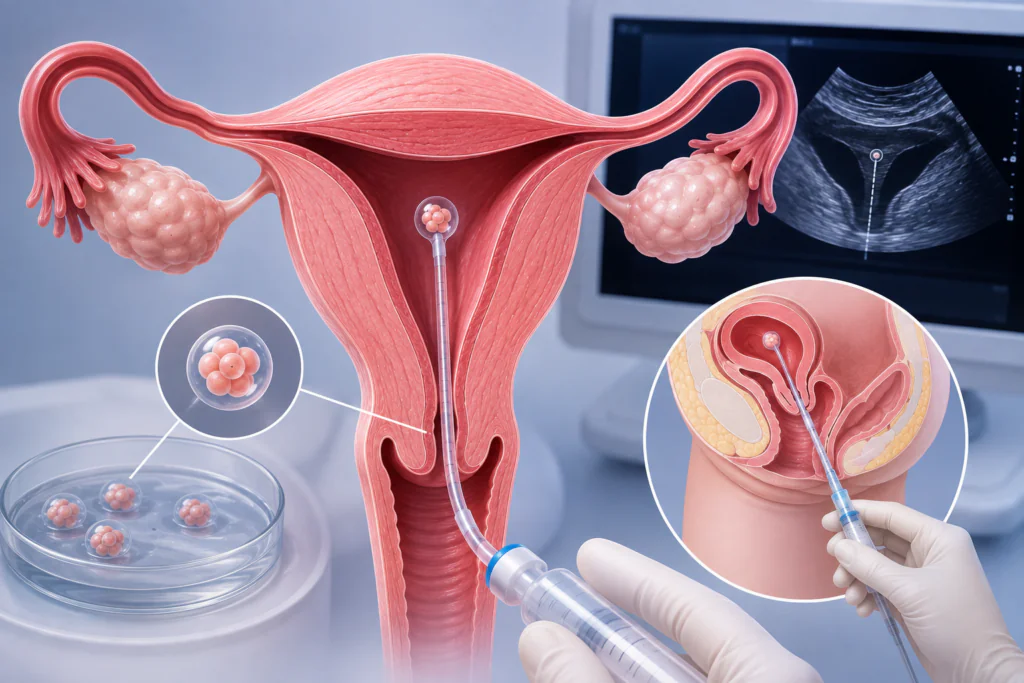
Frozen embryo transfer (FET) is an IVF procedure where an embryo created and cryopreserved in an earlier cycle is thawed and placed into the uterus during a separately prepared cycle. It allows the body to recover from egg retrieval, supports genetic testing when needed, and has success rates comparable to fresh embryo transfer with modern vitrification technology.
Introduction
If your fertility specialist has mentioned “frozen embryo transfer” as your next step, you’re probably holding a mix of hope and questions. What exactly happens to a frozen embryo? Is it as effective as a fresh one? How long before you can test for pregnancy?
Frozen embryo transfer, commonly called FET, has become one of the most widely used and well-studied parts of IVF treatment, including at fertility centers in Hisar and across Haryana. It’s no longer a backup plan for many patients, it’s the recommended first choice.
This guide walks through everything: what frozen embryo transfer actually is, how the procedure works, what the timeline looks like, real success rate data, what treatment in Hisar typically involves, and practical advice for the weeks before and
Key Takeaways
- Modern vitrification (fast-freezing) gives embryo survival rates often above 90%
- FET success rates are comparable to, and in some cases slightly better than, fresh transfer
- A typical FET cycle takes about 3-6 weeks from lining preparation to transfer
- Implantation usually begins 1-2 days after a blastocyst (day-5) transfer
- Pregnancy is confirmed via a blood test 9-14 days after transfer
- FET is often recommended for patients with high hormone levels post-stimulation, OHSS risk, or those doing genetic testing (PGT)
- Costs in India for a single FET cycle are generally lower than a full fresh IVF cycle, since retrieval isn’t repeated
What is Frozen Embryo Transfer?
Definition: Frozen embryo transfer (FET) is a step within IVF treatment where a previously frozen embryo is thawed and placed into a woman’s uterus, in a cycle separate from the original egg retrieval.
Here’s the simplest way to understand it: during a typical IVF cycle, doctors retrieve eggs, fertilize them in the lab, and grow the resulting embryos for a few days. Instead of transferring an embryo immediately (a “fresh” transfer), the embryo is frozen using a process called vitrification a rapid-freezing technique that prevents ice crystal damage.
Later, sometimes weeks, sometimes months, the embryo is thawed and transferred during a new, specifically prepared cycle. This gives doctors control over timing and lets the body recover from the hormonal effects of ovarian stimulation.
Medical Glossary: Key Terms
- Embryo a fertilized egg that has begun cell division
- Blastocyst a day-5 or day-6 stage embryo, more developed than a day-3 embryo
- Vitrification ultra-rapid freezing technique used to cryopreserve eggs and embryos
- Endometrium the lining of the uterus where the embryo implants
- Implantation the process where the embryo attaches to the uterine lining
- hCG (human chorionic gonadotropin) the pregnancy hormone measured in blood tests
- ART (Assisted Reproductive Technology) the umbrella term for IVF, ICSI, IUI, and related treatments
- PGT (Preimplantation Genetic Testing) genetic screening of embryos before transfer
Why is Frozen Embryo Transfer Used in IVF?
FET is used for several distinct medical and practical reasons:
- To lower OHSS risk Ovarian Hyperstimulation Syndrome is more likely if a fresh transfer happens while hormone levels are still elevated from stimulation
- To allow genetic testing (PGT) testing requires time to process results, so embryos must be frozen while waiting
- To optimize the uterine lining, sometimes the endometrium isn’t ideally prepared during the retrieval cycle
- For elective fertility preservation, some patients freeze embryos now and transfer years later
- For surplus embryos, when more embryos are created than needed in one attempt, extras are frozen for future use
- For scheduling flexibility, FET allows patients to plan the transfer date around their own life circumstances
Difference Between Fresh Embryo Transfer and Frozen Embryo Transfer
Factor | Fresh Embryo Transfer | Frozen Embryo Transfer (FET) |
Timing | Same cycle, 3–5 days after egg retrieval | Later, separately prepared cycle |
Body recovery | Minimal time to recover from stimulation | Full cycle to recover before transfer |
OHSS risk | Higher if hormone levels are elevated | Lower body resets before transfer |
Genetic testing (PGT) | Not compatible | Required if PGT is used |
Lining preparation | Same cycle as stimulation | Separately optimized cycle |
Scheduling control | Limited | Flexible |
Embryo survival post-process | Not applicable | High (often 90%+) with vitrification |
Success rates | Comparable | Comparable, sometimes slightly higher |
Step-by-Step Frozen Embryo Transfer Procedure
- Baseline scan and bloodwork – confirms your uterus is ready to begin the FET cycle
- Endometrial preparation – using either a natural cycle (tracking your own ovulation) or a medicated cycle (estrogen followed by progesterone)
- Monitoring the lining – regular ultrasounds check the endometrium’s thickness and pattern
- Trigger or progesterone start – once the lining is ready, progesterone support begins to prepare for implantation
- Embryo thawing – the embryologist thaws the selected embryo on the scheduled day
- Embryo transfer – a thin catheter places the embryo into the uterus; this is quick and generally painless, done without anaesthesia
- Post-transfer rest – brief rest at the clinic, followed by normal light activity at home
- The two-week wait – the period between transfer and pregnancy testing
- Pregnancy blood test – a beta hCG test confirms the result, usually 9–14 days after transfer
Frozen Embryo Transfer Timeline
Overall cycle length: Roughly 3-6 weeks from the start of lining preparation to the pregnancy test, depending on natural vs. medicated protocol.
Stage | Approximate Timing |
Baseline scan | Cycle day 1-3 |
Lining preparation begins | Cycle day 2-5 |
Lining monitoring scans | Every few days through week 2-3 |
Progesterone support starts | 3-6 days before transfer (based on embryo stage) |
Embryo transfer day | Once lining reaches target thickness |
Implantation window | 1-5 days after transfer |
Pregnancy blood test | 9-14 days after transfer |
How to Prepare for Frozen Embryo Transfer
- Follow your medication schedule precisely – timing matters for lining preparation
- Stay well-hydrated and maintain a balanced diet in the weeks leading up to transfer
- Moderate exercise is generally fine; avoid high-intensity workouts close to transfer day, per your doctor’s advice
- Manage stress through light activity, sleep, or relaxation techniques that work for you
- Avoid alcohol and smoking, which can affect implantation and overall treatment success
- Keep all monitoring appointments; missing a scan can affect your transfer timing
- Discuss any illness or fever with your clinic before transfer day, since being unwell can affect timing
Who is a Good Candidate for Frozen Embryo Transfer?
- Patients at risk of Ovarian Hyperstimulation Syndrome (OHSS)
- Patients undergoing preimplantation genetic testing (PGT)
- Patients whose uterine lining wasn’t optimal during the retrieval cycle
- Patients with surplus embryos frozen from a previous cycle
- Patients choosing elective fertility preservation
- Patients who need more time before proceeding to transfer, for medical or personal reasons
Benefits of Frozen Embryo Transfer
- Body fully recovers from ovarian stimulation before transfer
- Lower risk of OHSS
- Compatible with genetic testing (PGT)
- More scheduling flexibility for both patient and clinic
- Often improved endometrial receptivity, since the lining isn’t affected by stimulation hormones
- Allows use of surplus embryos from a single retrieval across multiple attempts, if needed
- High embryo survival rates with modern vitrification
Risks and Side Effects
FET is a well-established, generally safe procedure, but patients should be aware of:
- Mild cramping or spotting after the transfer procedure itself
- Side effects from hormone medication in medicated cycles: bloating, mood changes, breast tenderness
- Small risk of embryo not surviving the thaw, though this is uncommon with vitrification
- No guarantee of implantation as with all fertility treatments; success isn’t guaranteed in a single cycle
- Emotional strain of the two-week wait, which is common across both fresh and frozen transfers
Medical disclaimer: This article is for general educational purposes and does not replace personalized medical advice. Always consult your fertility specialist for guidance specific to your health history and treatment plan.
Frozen Embryo Transfer Success Rate
Success rates vary based on age, embryo quality, and clinic-specific lab standards, but in general:
- FET success rates are comparable to fresh transfer in most patient groups
- Blastocyst-stage (day-5) FET transfers tend to have higher implantation rates than day-3 transfers
- Younger patients (under 35) generally see higher success rates than older age groups
- Some studies suggest a modest advantage for FET in patients with elevated hormone levels after stimulation, due to improved lining receptivity
Ask your clinic for age-specific and protocol-specific success rate data, since a single “average” number rarely reflects your individual chances accurately.
Factors Affecting Success Rate
- Age of the woman at the time of egg retrieval (not necessarily at transfer)
- Embryo quality and grade; blastocysts generally have higher implantation potential
- Endometrial thickness and pattern at the time of transfer
- Underlying fertility diagnosis conditions like PCOS or endometriosis can play a role
- Lab and embryology standards vitrification technique and storage conditions matter
- Number of previous failed cycles, if any
- Lifestyle factors: smoking, alcohol, and significant stress can influence outcomes
Tips to Improve Frozen Embryo Transfer Success
- Choose a clinic with an experienced, in-house embryology team
- Ask about your specific embryo grade and what it means for your chances
- Follow your medicated cycle protocol exactly as prescribed; timing precision matters
- Maintain a balanced diet and moderate activity in the weeks before transfer
- Avoid smoking and alcohol during your treatment cycle
- Manage stress through methods that genuinely work for you; this varies by person
- Keep every monitoring appointment, since lining assessment guides your transfer timing
What Happens After Frozen Embryo Transfer?
- Immediately after: Brief rest at the clinic, then most patients go home and resume light activity
- Days 1-5: The embryo continues developing and beginning implantation into the uterine lining
- Days 6–9: hCG hormone levels begin rising as implantation progresses
- Days 9–14: A blood test confirms pregnancy
- If positive: Continued hormone support and early monitoring typically follow
- If negative: Your specialist will review the cycle and discuss next steps, which may include another FET attempt if embryos remain
Pregnancy Symptoms After Frozen Embryo Transfer
Some patients notice early symptoms, though many feel nothing unusual until their blood test both are normal. Possible symptoms include:
- Mild cramping or light spotting
- Breast tenderness
- Fatigue
- Bloating
- Mood changes
Important: Many of these overlap with normal side effects of progesterone support medication, so symptoms alone cannot confirm or rule out pregnancy. Only the blood test provides a reliable answer.
Foods to Eat After Frozen Embryo Transfer
- Leafy greens and vegetables rich in folate, supportive of early pregnancy health
- Whole grains for steady energy and fibre
- Lean proteins like dal, eggs, chicken, or fish, to support tissue repair
- Nuts and seeds good sources of healthy fats
- Warm, easily digestible meals many patients find these more comfortable post-transfer
- Plenty of water staying well-hydrated supports overall health
Foods to Avoid
- Raw or undercooked meat, fish, and eggs food safety risk
- Unpasteurized dairy products
- Excess caffeine moderate intake is generally advised
- Alcohol best avoided entirely during treatment and early pregnancy
- Excessively processed or high-sugar foods in favour of more balanced, nutrient-dense meals
- Raw sprouts and unwashed produce due to contamination risk
Frequently Asked Questions
1. What is frozen embryo transfer?
Frozen embryo transfer (FET) is an IVF procedure where an embryo frozen in a previous cycle is thawed and placed into the uterus during a later, separately prepared cycle.
2. How does frozen embryo transfer work?
The uterine lining is prepared using a natural or medicated cycle, monitored via ultrasound, and once ready, the thawed embryo is placed into the uterus using a thin catheter.
3. Is frozen embryo transfer better than fresh transfer?
Neither is universally better success rates are generally comparable, though FET may offer advantages like lower OHSS risk and compatibility with genetic testing.
4. What is the success rate of frozen embryo transfer?
Success rates vary by age, embryo quality, and clinic standards but are generally comparable to fresh transfer, with blastocyst-stage transfers often showing higher implantation rates.
5. How long does frozen embryo transfer take?
A full FET cycle typically takes about 3–6 weeks, from the start of lining preparation to the pregnancy test.
6. Is frozen embryo transfer painful?
The transfer procedure itself is usually painless and doesn’t require anesthesia, though mild cramping afterward is common.
7. When should pregnancy be tested after FET?
A blood pregnancy test is typically done 9–14 days after transfer, depending on the embryo stage and clinic protocol.
8. What precautions should be taken after FET?
Avoid strenuous exercise, alcohol, and smoking; follow medication instructions closely; and report any unusual symptoms to your clinic.
9. What foods help implantation after FET?
A balanced diet with leafy greens, whole grains, lean proteins, and adequate hydration supports overall reproductive health, though no single food guarantees implantation.
10. Can frozen embryo transfer fail?
Yes, as with all fertility treatments, implantation isn’t guaranteed in a single cycle. If it fails, your specialist will review the case and discuss next steps.
11. How many days after frozen embryo transfer does implantation occur?
Implantation typically begins 1–2 days after transfer for a blastocyst (day-5) embryo, and slightly later for a day-3 embryo.
12. Does freezing reduce embryo quality?
With modern vitrification technology, embryo survival rates after thawing are generally high, often above 90%, with minimal impact on quality.
13. What is the cost of frozen embryo transfer in Hisar?
Costs vary by clinic, generally covering lining preparation monitoring, medication, and the transfer procedure itself. Hisar-based fertility centers typically offer lower costs than metro-city clinics for comparable lab quality; a personalized estimate from your clinic is the most reliable source.
14. Can I have a natural frozen embryo transfer cycle?
Yes, for patients with regular ovulation, a natural FET cycle tracks the body’s own hormone patterns instead of using medication to prepare the lining.
15. What is the difference between day-3 and day-5 frozen embryo transfer?
A day-3 embryo is transferred at an earlier developmental stage, while a day-5 (blastocyst) embryo has developed further in the lab before freezing and transfer.
16. How many embryos are typically transferred in an FET cycle?
This depends on embryo quality, patient age, and clinical guidelines; many clinics now recommend single embryo transfer to reduce the risk of multiple pregnancy.
17. What if my FET cycle is cancelled?
Cycles can occasionally be adjusted or postponed if the lining doesn’t reach the target thickness or hormone levels aren’t optimal; your specialist will guide next steps.
18. Is bed rest required after frozen embryo transfer?
Most clinics recommend brief rest immediately after the procedure but do not require extended bed rest, as normal light activity doesn’t reduce implantation chances.
19. Can stress affect frozen embryo transfer success?
While stress alone isn’t proven to directly cause implantation failure, managing stress supports overall wellbeing during a demanding treatment period.
20. How soon can I fly or travel after frozen embryo transfer?
Many patients can resume normal travel within a few days, but it’s best to confirm timing with your specific clinic based on your individual case.
21. What happens to unused frozen embryos?
Unused embryos remain in storage under agreed terms with the clinic and can be used in future cycles, donated, or discarded per the patient’s documented wishes.
22. Does age affect frozen embryo transfer success more than fresh transfer?
Age at the time of egg retrieval is generally the more significant factor for both fresh and frozen transfer, since it reflects the biological age of the eggs used.
23. Can frozen embryo transfer be done after a failed fresh cycle?
Yes, if embryos were frozen during a previous retrieval, FET can be attempted in a subsequent cycle after a failed fresh transfer.
24. Is frozen embryo transfer safe?
FET is a well-established, generally safe procedure used widely in IVF treatment worldwide, though like all medical procedures it carries some risks your specialist will discuss.
25. How do I choose a good clinic for frozen embryo transfer?
Look for an experienced embryology team, transparent success rate data specific to your age group, and clear communication about your personalized treatment plan.
Myth vs Fact Table
Myth | Fact |
Frozen embryos have lower success rates than fresh ones | Success rates are generally comparable with modern vitrification technology |
Freezing damages embryo quality | Vitrification survival rates are often above 90% with minimal quality impact |
FET is only for “problem” cases | Many patients without complications choose FET for genetic testing or better lining timing |
The embryo transfer procedure itself is painful | It’s generally painless and doesn’t require anesthesia |
You need strict bed rest after transfer | Normal light activity is generally fine; extended bed rest isn’t proven to improve outcomes |
A negative symptom-free two-week wait means it failed | Many successful pregnancies show no early symptoms at all |
One failed FET means it won’t work next time | Many patients conceive successfully in a subsequent FET cycle after an initial failure |
Quick Comparison Table
Aspect | Frozen Embryo Transfer (FET) |
Best suited for | OHSS risk, genetic testing, lining optimization, surplus embryos |
Typical cycle length | 3–6 weeks |
Embryo survival post-thaw | Often 90%+ with vitrification |
Procedure discomfort | Minimal, no anesthesia required |
Pregnancy test timing | 9–14 days after transfer |
Scheduling flexibility | High |
Expert Tips
- Ask your embryologist about your specific embryo’s freezing and thawing survival data
- Confirm whether your clinic uses a natural or medicated protocol, and understand why
- Keep a simple day-by-day calendar of medications and appointments to avoid missed doses
- Don’t rely on early symptoms (or their absence) to predict your result wait for the blood test
- If your first FET cycle doesn’t succeed, ask specifically what your specialist recommends adjusting next time
Conclusion
Frozen embryo transfer has become a cornerstone of modern IVF treatment, not a fallback option, but often the recommended path for better safety, flexibility, and, in many cases, comparable or improved outcomes. Understanding the process, timeline, and realistic expectations can make this stage of your fertility journey feel far less uncertain.
At Sonakshi Children Hospital & IVF Center in Hisar, this stage of treatment is guided by experienced fertility specialists, including Dr. Pooja Dhir Bhayana, alongside an in-house embryology team, so your frozen embryo transfer is planned around your specific hormone profile and lining response, not a generic protocol.


