
PGT-A Testing in IVF: How Genetic Screening Can Improve Success Rates
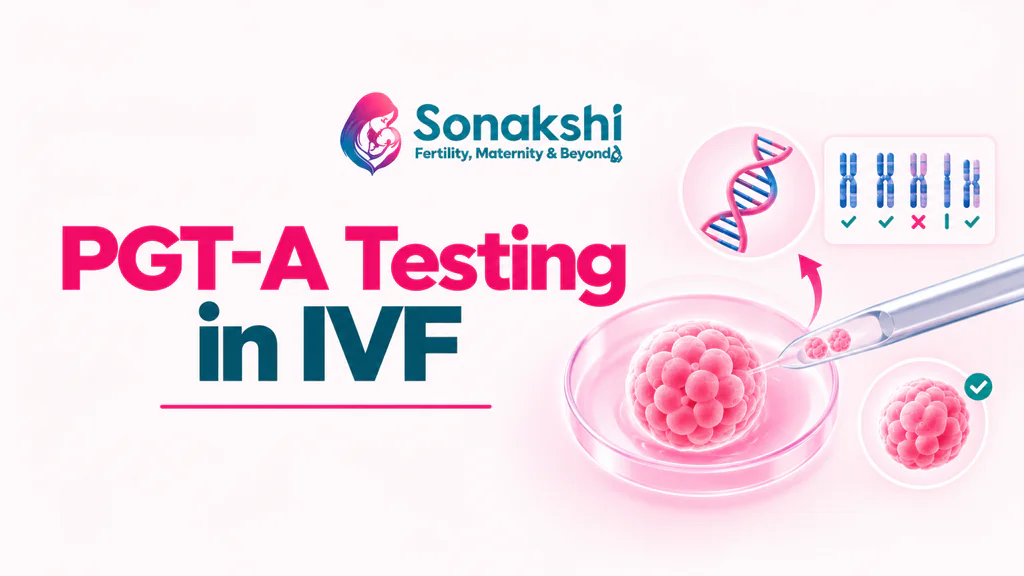
Some questions arrive quietly, usually after a cycle that didn’t work. The embryo looked fine. So why? This is where PGT-A testing in IVF enters the picture. It stands for preimplantation genetic testing for aneuploidy, a form of preimplantation genetic testing that checks an embryo’s chromosomes before transfer. Simple idea. Big questions. And genetic testing IVF is now a common topic in fertility clinics.
What Is PGT-A Testing in IVF, Really?
Chromosomes are instruction books inside every cell. A healthy embryo needs 46, half from the egg, half from the sperm. Too many or too few is a chromosomal abnormality, and it is a leading reason embryos fail to implant or end in early miscarriage. PGT-A testing in IVF counts them. Nothing more. It does not look for single-gene illnesses like thalassemia, since that needs a different test called PGT-M.
Age sits at the heart of this. Eggs age with the woman, so a chromosomal abnormality becomes likelier over time. In the early thirties, perhaps a third of embryos are affected, and past forty, well over half. The odd part is that an embryo can look perfect under a microscope and still be wrong inside.
How Embryo Screening Works, Step by Step
Eggs are collected and fertilised. Embryos grow for five or six days until they reach the blastocyst stage. Then an embryologist gently removes a few cells from the outer layer, the part that becomes the placenta, not the baby. This preimplantation genetic testing step happens while the embryos are frozen and the cells travel to a genetics lab. Results take one to two weeks. The lab looks for any chromosomal abnormality, and only embryos with the right count are chosen for a later frozen transfer. That waiting is why embryo screening feels slower than a regular cycle. Patience, then.
Clinics use the phrase genetic testing IVF for this whole pathway, and the skill of the biopsy matters. Done well, the risk to the embryo is low.
Does PGT-A Testing in IVF Really Improve Success Rates?
Let me be careful here. Not for everyone. The honest answer depends on who you are.
For women over 35, or those with repeated miscarriages or failed cycles, PGT-A testing in IVF can help doctors choose the embryo with the best chance. Studies often show a higher pregnancy rate per transfer, fewer miscarriages, and fewer transfers needed. For younger women with plenty of good embryos, the gain is less clear. Some healthy embryos may be set aside by mistake, so the total number of babies across a full cycle may not rise. Bodies like the ASRM say the evidence does not support routine use for everyone. It is a tool. Not a promise.
Who Should Think About Genetic Testing IVF?
Doctors usually raise it with women aged 35 and above, couples facing recurrent miscarriage or repeated implantation failure, and anyone whose earlier pregnancy involved a chromosomal abnormality. It also suits people planning a single embryo transfer, which lowers the twin risk. But if you only have one or two embryos, PGT-A testing in IVF could leave you with none, so that talk needs care. Preimplantation genetic testing is a decision, not a default.
The Honest Limits of Embryo Screening
Cost is real, and it sits on top of an already expensive treatment, so PGT-A testing in IVF should be budgeted early. Results are very accurate, not perfect, and false results can happen. Some embryos come back mosaic, a mix of normal and abnormal cells, which is tricky. Embryo screening cannot detect every condition, and genetic testing IVF cannot check a baby’s health after birth. It reduces uncertainty. It does not remove it.
How Sonakshi Care Can Help
Choosing whether to test is rarely simple. Sonakshi Care (sonakshicare.com) is a place couples can go to ask whether PGT-A testing in IVF suits their age, history and budget before deciding. A good consultation starts with your reports, then your options, with preimplantation genetic testing explained in plain words and genetic testing IVF options laid out clearly. Not the other way round.
Looking for the Best IVF Center in Haryana?
Plenty of couples type best IVF center in Haryana into Google at midnight. Fair. But best is not the loudest advertisement. Look for honest success rates, an in-house embryology lab, and doctors who tell you when you don’t need testing. The same checklist works if you search best IVF center near me. Ask how the clinic handles mosaic results, and which accredited lab does its embryo screening. Good PGT-A testing in IVF is as much about counselling as technology.
Frequently Asked Questions About PGT-A Testing in IVF
1. What is PGT-A testing in IVF, and how is it different from PGT-M?
PGT-A testing in IVF checks whether an embryo has the correct number of chromosomes, which finds a chromosomal abnormality such as the one behind Down syndrome. PGT-M looks for one specific inherited gene condition, like thalassemia, when parents are carriers. Both are types of preimplantation genetic testing, but they answer different questions, and some couples need both.
2. Does the biopsy hurt the embryo?
An embryo has no nerves, so there is no pain. A skilled embryologist removes only a few cells from the layer that forms the placenta, and in experienced labs the risk of harm is low. This is why the lab matters so much, since embryo screening depends on careful hands. The safety of PGT-A testing in IVF rests on that skill.
3. Can it guarantee a healthy baby?
No. A normal result only means the chromosome count looked right. It does not rule out every genetic condition or pregnancy problem, and a transferred normal embryo does not always implant. PGT-A testing in IVF improves selection, not certainty. Rarely, a chromosomal abnormality can even be missed, which is why doctors still advise prenatal checks later.
4. How long does it take, and what does it cost?
The biopsy is done on day five or six, embryos are frozen, and results arrive in one to two weeks, so transfer happens in a later cycle. Cost depends on how many embryos are tested and which lab is used. Ask for a written estimate and check what a genetic testing IVF package includes, such as biopsy, freezing and reporting. Budget for PGT-A testing in IVF early.
5. What is a mosaic embryo, and can it be used?
A mosaic embryo holds both normal and abnormal cells. Some have grown into healthy babies, though chances are lower and miscarriage risk is somewhat higher than with fully normal embryos. Many doctors use them only if no normal embryo exists, after counselling. This is a grey zone of preimplantation genetic testing, and an honest clinic will say so, because a chromosomal abnormality in some cells is not the same as one in all.
6. Who can safely skip it?
Women under 35 with no miscarriages and several good embryos may not need it, and with very few embryos, testing can leave none to transfer. Ask your doctor whether PGT-A testing in IVF fits your case, and how embryo screening results would change the plan. If you search best IVF center near me, pick a clinic that explains genetic testing IVF openly, not one that pushes preimplantation genetic testing.


