
What Is Blastocyst Transfer? Does It Improve IVF Success Rates?
For couples struggling with infertility, In Vitro Fertilization (IVF) has become one of the most effective fertility treatments available today. One of the most important stages of an IVF procedure is embryo transfer, where a healthy embryo is placed into the uterus to achieve pregnancy.
Among the different embryo transfer techniques, blastocyst transfer has gained significant attention because it may improve the chances of implantation and pregnancy in suitable patients. But what exactly is blastocyst transfer, and does it really increase IVF success rates?
In this guide, we’ll explain everything you need to know about blastocyst transfer, the IVF process, embryo transfer, and the factors that influence pregnancy success.
What Is IVF?
IVF (In Vitro Fertilization) is an advanced fertility treatment in which an egg is fertilized with sperm in a specialized laboratory. After fertilization, the embryo is carefully monitored before being transferred into the woman’s uterus.
The basic IVF process includes:
- Fertility evaluation
- Ovarian stimulation
- Egg retrieval
- Fertilization in the laboratory
- Embryo development
- IVF embryo transfer
- Pregnancy test
Today, IVF treatment has helped millions of couples worldwide achieve successful pregnancies.
What Is Blastocyst Transfer?
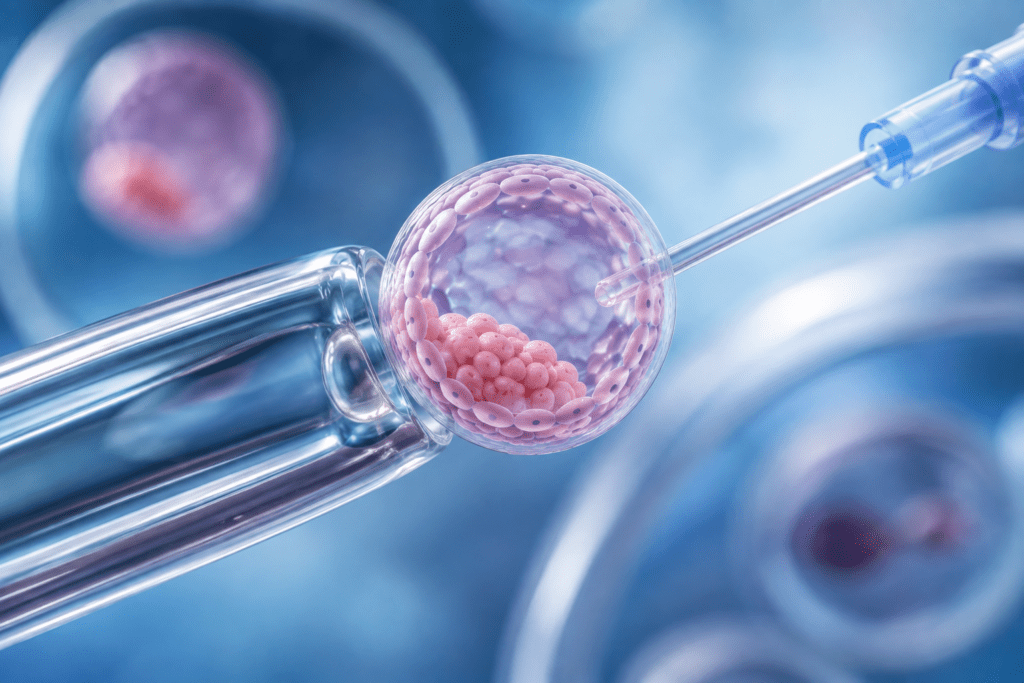
A blastocyst is an embryo that has developed for approximately five to six days after fertilisation.
Instead of transferring embryos on Day 2 or Day 3, fertility specialists may recommend waiting until Day 5 when the embryo reaches the blastocyst stage.
At this stage, the embryo contains hundreds of healthy cells and has developed into two important parts:
- Inner Cell Mass (future baby)
- Trophectoderm (future placenta)
Because the embryo is more developed, doctors can better identify embryos with higher implantation potential.
How Does Blastocyst Transfer Work?
During the IVF embryo transfer procedure:
- Eggs are collected from the ovaries.
- Eggs are fertilised with sperm in the IVF laboratory.
- The embryos grow under continuous monitoring.
- The healthiest embryo develops into a blastocyst.
- The selected blastocyst is transferred into the uterus using a thin catheter.
The procedure usually takes only a few minutes and generally does not require anaesthesia.
Unlike egg retrieval, embryo transfer is simple, comfortable, and patients can usually return home shortly afterwards.
Why Is Day 5 Blastocyst Transfer Preferred?
Many fertility specialists prefer Day 5 transfer because it allows additional time to observe embryo development.
Some potential advantages include:
- Better embryo selection
- Improved implantation potential
- Higher pregnancy chances in selected patients
- Reduced risk of transferring embryos that stop developing early
- Better synchronisation with the uterine lining
However, not every patient is an ideal candidate. Your fertility specialist will recommend the best approach based on your medical history and embryo development.
Does Blastocyst Transfer Improve IVF Success Rates?
One of the most common questions patients ask is:
Does blastocyst transfer improve IVF success rates?
In many suitable cases, the answer can be yes.
Because only the healthiest embryos usually reach the blastocyst stage, transferring a Day 5 embryo may improve the likelihood of implantation compared with earlier-stage transfers. Success, however, depends on many individual factors, including the woman’s age, embryo quality, uterine health, and overall fertility condition.
It’s important to understand that blastocyst transfer does not guarantee pregnancy, but it can improve the chances for many patients when recommended by a fertility specialist.
Your fertility specialist will carefully evaluate your individual condition and recommend the embryo transfer approach that is most appropriate for your treatment and gives you the best possible chance of a successful pregnancy.
Doctor’s Perspective: Is Blastocyst Transfer Right for Every IVF Patient?
Expert Guidance from Dr. Pooja Dhir Bhayana, IVF Specialist
Dr. Pooja Dhir Bhayana, IVF Specialist at Sonakshi IVF Centre, holds an MBBS and MD in Obstetrics & Gynaecology with specialized training in Assisted Reproductive Technology (ART).
Dr. Pooja explains that Day 5 or Day 6 blastocyst transfer is not suitable for every IVF patient. The decision depends on factors such as the patient’s age, ovarian response, embryo development, previous IVF history, and overall reproductive health.
When appropriate, allowing embryos to reach the blastocyst stage can provide additional information about their development and help the fertility team select a suitable embryo for transfer.
At Sonakshi IVF Centre, Dr. Pooja follows an individualized, evidence-based approach, helping patients understand their IVF and embryo-transfer options based on their specific fertility needs.
Factors That Affect Blastocyst Transfer Success
Several factors influence IVF success, including:
- Woman’s age
- Egg quality
- Sperm quality
- Embryo quality
- Uterine lining thickness
- Lifestyle habits
- Medical conditions
- Experience of the fertility specialist
- Advanced IVF laboratory technology
Choosing a truste/rienced embryologists and fertility specialist can play an important role in achieving better outcomes.
Fresh vs. Frozen Blastocyst Transfer: Which One Is Better?
One of the most common questions couples ask during IVF treatment is whether a fresh or frozen blastocyst transfer offers better pregnancy chances. The answer depends on your individual fertility condition, hormone levels, uterine health, and your doctor’s recommendation.
In a fresh blastocyst transfer, the embryo is transferred into the uterus within the same IVF cycle after egg retrieval. In a frozen blastocyst transfer (FET), the embryo is frozen using advanced vitrification techniques and transferred in a later menstrual cycle when the uterus is better prepared for implantation.
Recent advancements in fertility treatment have made frozen embryo transfer highly successful. For many patients, a frozen transfer may provide implantation rates comparable to or even better than a fresh transfer because the uterus has more time to recover after ovarian stimulation. However, every patient is different, and the best option should always be decided after a detailed fertility evaluation.
Symptoms After Blastocyst Transfer
After an IVF embryo transfer, many women closely monitor their bodies for signs of implantation. While some women notice symptoms, others may not experience anything unusual and still have a successful pregnancy.
Common symptoms may include:
- Mild cramping
- Light spotting (implantation bleeding)
- Breast tenderness
- Fatigue
- Bloating
- Mild pelvic discomfort
These symptoms vary from person to person and do not confirm whether the IVF cycle has been successful. The only reliable way to confirm pregnancy is through a beta hCG blood test, usually performed 10–14 days after embryo transfer.
How to Improve IVF Success Rates After Blastocyst Transfer
Although no treatment can guarantee pregnancy, certain healthy lifestyle choices may improve your chances of a successful IVF pregnancy. Following your fertility specialist’s advice, taking prescribed medications on time, maintaining a healthy diet, staying hydrated, managing stress, and avoiding smoking or alcohol can all contribute to a healthier environment for embryo implantation.
Choosing an experienced fertility centre with skilled fertility specialists, advanced embryology laboratories, and personalised treatment plans can also make a significant difference in achieving better outcomes.
Who Is a Good Candidate for Blastocyst Transfer?
Blastocyst transfer may be recommended for couples who produce multiple healthy embryos during IVF treatment, women with good ovarian reserve, patients with previous unsuccessful IVF cycles, or those undergoing embryo genetic testing. However, not every patient will benefit from a Day 5 transfer. Your fertility specialist will recommend the most suitable embryo transfer strategy based on your medical history, age, and embryo development.
Why Choose Sonakshi IVF Centre in Hisar?
Finding the right fertility clinic is one of the most important decisions during your parenthood journey. At Sonakshi IVF Centre, we combine advanced reproductive technology with compassionate fertility care to provide personalized treatment for every couple. Our experienced fertility specialists carefully evaluate each case and develop customized IVF treatment plans based on individual medical needs.
As a trusted fertility centre, we offer comprehensive fertility services, including IVF, IUI, ICSI, fertility preservation, donor egg IVF, fertility counselling, and advanced embryo transfer procedures. Our modern embryology laboratory, patient-focused approach, and commitment to ethical fertility care help couples move closer to achieving their dream of parenthood.
Whether you are beginning your fertility journey or have experienced previous IVF failures, our experienced team is dedicated to providing personalised guidance, evidence-based treatment, and compassionate support at every stage of the IVF process.
Fertility Care Across Haryana
Choosing fertility care often starts with finding a trusted medical team that is convenient to reach. To make fertility consultations and treatment more accessible, Sonakshi IVF Centre has a presence across several cities in Haryana, including Hisar, Rohtak, Kaithal, Bhiwani, and Hansi.
Patients can connect with the centre nearest to them, discuss their fertility concerns, and understand the treatment options that may be appropriate for their individual situation. The medical team can guide patients through the different stages of treatment, including whether blastocyst transfer may be suitable for them.
You can visit our centres in:
Frequently Asked Questions
Does blastocyst transfer increase IVF success rates?
Blastocyst transfer may improve implantation and pregnancy chances in suitable patients because the embryo has developed further before transfer. However, the success rate also depends on age, embryo quality, and overall reproductive health.
What is the difference between a Day 3 and Day 5 embryo transfer?
A Day 3 embryo is transferred earlier in its development, while a Day 5 embryo has reached the blastocyst stage. Day 5 embryos often allow better embryo selection in appropriate cases.
Is blastocyst transfer painful?
No. The embryo transfer procedure is generally simple, takes only a few minutes, and usually does not require anaesthesia.
When should I take a pregnancy test after blastocyst transfer?
Most fertility specialists recommend a beta hCG blood test approximately 10–14 days after embryo transfer for accurate pregnancy confirmation.
Can donor egg IVF include blastocyst transfer?
Yes. In many IVF with donated eggs cycles, embryos are cultured to the blastocyst stage before transfer, depending on embryo development and the fertility specialist’s recommendation.
What is a blastocyst transfer?
Blastocyst transfer is an IVF procedure in which an embryo that has developed to the blastocyst stage, usually around Day 5 or Day 6, is transferred into the uterus.
How many embryos are transferred during blastocyst transfer?
In many cases, a single blastocyst may be transferred to reduce the risk of multiple pregnancy. The number depends on the patient’s circumstances and the fertility specialist’s recommendation.
How long does it take to know if blastocyst transfer was successful?
A pregnancy test is usually performed several days after embryo transfer, based on the fertility specialist’s instructions. Testing too early may give an inaccurate result.
What happens after a blastocyst is transferred?
After transfer, the embryo may implant into the uterine lining. Patients are generally advised to follow their prescribed medications and attend the scheduled follow-up appointment and pregnancy test.
Can frozen blastocysts be used for embryo transfer?
Yes. Suitable blastocysts can be frozen and stored for future use. A frozen embryo transfer can be planned when the fertility specialist considers the uterine environment appropriate.
What is the difference between fresh and frozen blastocyst transfer?
In a fresh transfer, the embryo is transferred during the same IVF treatment cycle. In a frozen transfer, a previously frozen embryo is thawed and transferred during a later cycle.
How do doctors decide which blastocyst to transfer?
Embryologists assess factors related to embryo development and morphology, along with the patient’s clinical circumstances. The final decision is made as part of an individualized treatment plan.
Conclusion
Blastocyst transfer has become an important advancement in modern In Vitro Fertilization (IVF). By allowing embryos to develop until Day 5, fertility specialists can identify embryos with stronger developmental potential before IVF embryo transfer. While blastocyst transfer may improve IVF success rates for many suitable patients, successful pregnancy depends on several factors, including age, embryo quality, uterine health, lifestyle, and expert medical care.
If you are planning IVF treatment and would like to understand whether blastocyst transfer is the right option for you, consult the experienced fertility specialists at Sonakshi IVF Centre. Early evaluation, personalized treatment, and advanced fertility technology can significantly improve your chances of building the family you have always dreamed of.


