
What Is an HSG Test and Why Is It Done? A Simple Guide for Couples Trying to Conceive
You have been trying for a baby for months. Maybe longer. Then your doctor says something that sounds like a code: “Let’s schedule an HSG test.”
Take a breath. It is simpler than it sounds. HSG stands for hysterosalpingography, a long word for a short X-ray. Here is what the HSG test is, why doctors order it, and what it actually feels like.
What Is an HSG Test, Really?
Think of the uterus as a small pear-shaped room. Two thin pipes, the fallopian tubes, leave from its top corners and reach toward the ovaries. An egg travels down one pipe to meet the sperm. If the pipe is shut, they never meet.
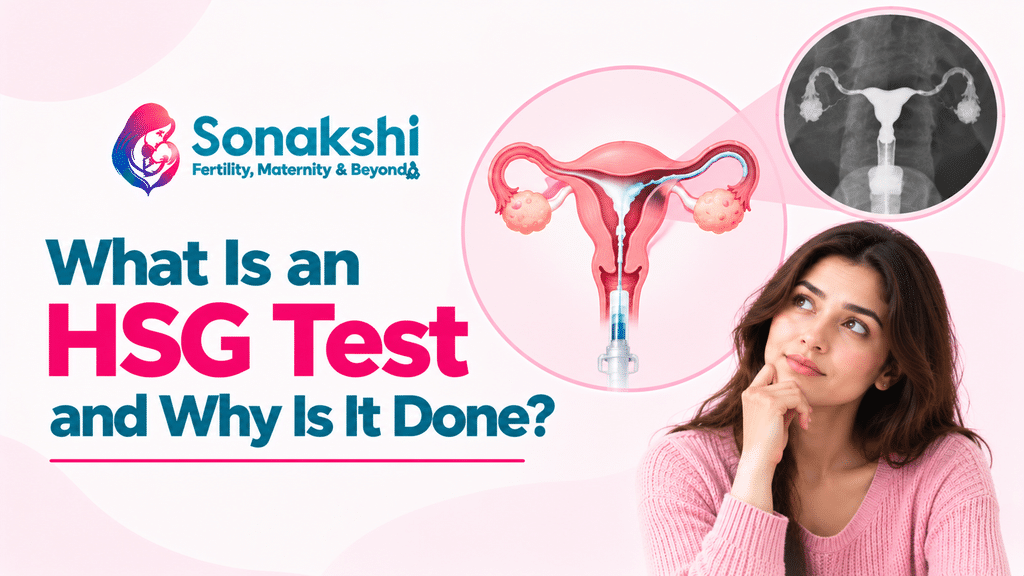
The HSG test lets a doctor look inside the uterus and the fallopian tubes. A thin tube is placed at the mouth of the womb, a special dye goes in slowly, and X-ray pictures follow it. The dye looks white on screen. If it fills the uterus and spills out of both tubes, the path is open. That makes it a classic fallopian tubes test, and still one of the most trusted.
Why Is the HSG Test Done?
Mainly to find tubal blockage. You cannot feel it. No pain, periods on time, everything seems normal. That is what makes it sneaky. As a fallopian tube test, it answers one blunt question: are the pipes open?
Blockage can follow an old infection, endometriosis, a past surgery, or pelvic tuberculosis. Sometimes there is no clear reason at all.
An HSG test also shows the inside shape of the uterus. Fibroids, polyps, scar tissue, or a small wall called a septum can stop an embryo from settling. Doctors also use it to spot fluid-filled tubes (hydrosalpinx), to look into repeated miscarriages, and to check the tubes after surgery.
It sits inside wider fertility testing, next to blood tests, an ultrasound, and a semen analysis. Yes, the man gets tested too. A large share of cases involve a male factor.
How to Prepare for Your HSG Test
Timing matters. Most doctors schedule it after your period ends and before ovulation, usually between day 6 and day 12 of the cycle. You are not pregnant yet, and the lining is thin, so the pictures are clear. Avoid unprotected intercourse between your period and the test, just to be safe.
Before a fallopian tube test like this, tell the doctor about any allergies, especially to iodine or dye, and about any pelvic infection. A painkiller about an hour before often helps. Some doctors add antibiotics. Wear loose clothes, carry a sanitary pad, and take someone with you. Not required, but comforting.
If this is one step in a longer fertility testing journey, ask the doctor how the other reports connect to it.
What Happens During the Procedure
You lie down with knees bent, like a routine pelvic check. The doctor places a speculum, slides a thin tube through the cervix, and pushes in the dye. Pictures are taken. The whole thing takes five to ten minutes.
Cramps? Yes, usually like strong period pain. Some feel a warm pulling. Most people call it uncomfortable, not unbearable. Slow breathing helps, more than you would think. Many return to normal activities the same day. After an HSG test, light spotting and a watery discharge for a few days are common.
Reading HSG Test Results: Normal or Blocked?
Normal means the dye flows freely through the uterus and both tubes. Blocked means it stops somewhere. One blocked side does not mean no pregnancy, because the other tube may work fine.
But careful. Sometimes a tube clamps shut from pain or nerves. That spasm can mimic tubal blockage when nothing is really wrong. Even a good fallopian tube test can be fooled, so doctors may repeat it or confirm with another scan. No test is perfect, and the HSG test is no exception.
Is It Safe? Risks Worth Knowing
The HSG test is considered safe when done for a good reason. The radiation dose is small. Risks are mostly cramps and spotting. Rarely, infection or an allergic reaction to the dye can happen. Call your doctor if you get fever, foul-smelling discharge, severe pain, or heavy bleeding. It is not done if you may be pregnant or have an active infection.
Can an HSG Test Help You Get Pregnant?
Some studies suggest slightly better chances in the months right after, especially when oil-based dye is used. The flush may clear tiny debris. It is not a treatment, just a happy side effect. The main job of an HSG test is to give answers, and this fallopian tubes test tells you where you stand.
What If Your Tubes Are Blocked?
Don’t panic. A small blockage near the tube’s end may be opened by laparoscopic surgery. A badly damaged or fluid-filled tube may be removed before IVF. When both tubes are closed, IVF skips them entirely: eggs are collected, fertilised in the lab, and the embryo is placed in the womb. Tubal blockage is one of the clearest reasons for IVF. Fertility testing results should guide that choice, not guesswork.
Where you go next matters as much as the test. If you are searching for the best IVF center in Haryana, look past glossy ads. Ask how experienced the doctor is, whether results are explained in plain words, whether costs are shared upfront, and whether success rates are honest. The same checklist works when you type “best IVF center near me” into a search bar late at night.
Sonakshi Care helps couples begin with basic fertility testing, including the HSG test, and explains each report step by step before suggesting any treatment.
Fertility testing is not a verdict. It is information. A tubal blockage found early is a problem you can plan around, and an HSG test is often the first honest look at the road ahead.
FAQs
1. Is the HSG test painful?
Most women feel cramps similar to period pain for a few minutes, mainly when the dye enters the uterus. A painkiller before the HSG test, slow breathing, and a relaxed mind make it easier. If you have had severe period pain before, tell your doctor.
2. How soon do I get my HSG test results?
The doctor usually watches the dye move on screen, so a first impression comes right away. The formal report may take a few hours to a day. A fallopian tubes test result is only useful when explained properly, so ask the doctor to show you the images.
3. Can I try for a baby right after an HSG test?
Usually yes, in the same cycle, unless your doctor says otherwise. If tubal blockage was found, your doctor will first discuss surgery or IVF.
4. When should a couple start fertility testing?
Generally, after one year of trying without success, or after six months if the woman is over 35. Start earlier if you have irregular periods, endometriosis, past pelvic infection, or repeated miscarriages. Fertility testing should include both partners.
5. Are there side effects after an HSG test?
Light spotting, mild cramps, and watery discharge for a few days are normal. Rest if you need to. Fever, heavy bleeding, or severe pain are not normal, so contact your doctor quickly.
6. Is an HSG test better than an ultrasound or laparoscopy?
They do different jobs. A normal ultrasound cannot easily show whether tubes are open, which is why the HSG test is used as a fallopian tube test. Laparoscopy lets the doctor see the tubes directly and treat problems, but it needs surgery, so it usually comes later.


