
Obesity and Fertility: Can Being Overweight Affect Your Chances of Pregnancy?
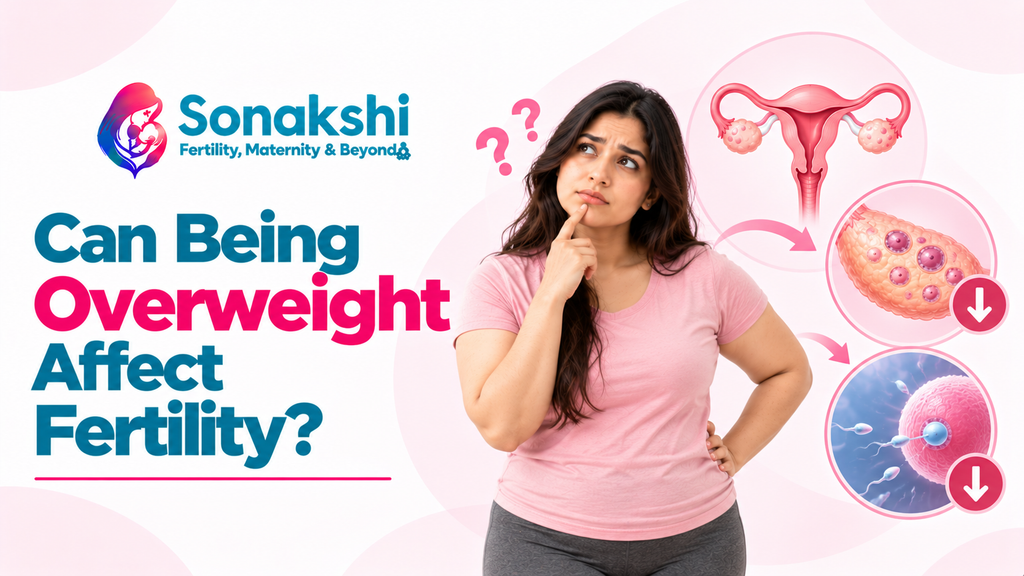
Many couples ask this question quietly, sometimes only in a late-night search bar. Can extra body weight make it harder to have a baby? Yes, it can. The link between obesity and fertility is real, well studied, and still not discussed enough. Not everyone who is overweight struggles to conceive. Plenty don’t. But the odds shift, and knowing how they shift is the first step toward doing something about it.
What Doctors Mean by Overweight and Obese
Doctors use BMI, or body mass index, which compares your weight with your height. A BMI of 25 or more is called overweight, and 30 or more is called obese. For Indians and many South Asians, the cut-offs are lower. A BMI of 23 is often treated as overweight and 25 as obese, because our bodies tend to store fat around the belly, where it does more harm. So any honest talk about weight and fertility starts with knowing where you actually stand.
How Obesity and Fertility Are Connected Inside the Body
Fat is not just storage. It is active tissue that makes hormones, especially estrogen. Too much fat means too much estrogen, and the brain, which watches hormone levels closely, gets confused. It sends mixed signals to the ovaries. The result is often irregular ovulation, or none at all. No egg released, no chance of natural pregnancy that month. Simple as that.
Extra weight also raises insulin, the hormone that handles sugar. High insulin pushes the ovaries to make more male hormones, which is exactly what happens in PCOS, or polycystic ovary syndrome. PCOS is one of the most common reasons for missed periods and poor ovulation in Indian women, and weight gain makes it worse. A loop, really. Weight worsens PCOS, and PCOS makes losing weight harder—frustrating, and nobody’s fault.
Weight and Fertility in Men: The Part People Skip
Most articles talk only about women. That’s not fair, and not accurate either. In men, extra fat can lower testosterone, reduce sperm count, and hurt how sperm move and look. Heat matters too. Fat around the groin and thighs raises the temperature near the testicles, and sperm don’t like heat. So obesity and fertility are a couple’s topic, never one person’s burden. Good reproductive health needs two healthy partners.
Signs Your Weight May Be Affecting Ovulation
Watch for periods that come more than 35 days apart, or vanish for months. Very heavy or very light bleeding. Acne, extra facial hair, thinning hair on the scalp. Dark, velvety patches on the neck or underarms, a sign the body is resisting insulin. A year of trying with no result. If a few of these sound familiar, don’t panic. Just get checked. Early answers are kinder than late worries.
What Extra Weight Does After You Conceive
The story doesn’t end at a positive test. Higher weight is linked with a greater risk of miscarriage, gestational diabetes, high blood pressure in pregnancy, and trouble during delivery. Egg quality may also take a hit, and in IVF, a higher BMI can mean lower success rates and higher medicine doses. None of this is meant to scare you. It simply explains why doctors bring up weight and fertility so early in the conversation.
Good News: Small Changes, Real Difference
Here is the hopeful part. You don’t need to become “thin.” Losing even 5 to 10 percent of body weight can bring back regular ovulation in many women and improve sperm quality in men. For someone weighing 80 kilos, that’s 4 to 8 kilos. Not easy. Doable.
What helps most is boringly simple. Eat home-cooked meals built around vegetables, dal, whole grains, and protein. Cut sugary drinks and packed snacks. Walk 30 minutes on most days. Sleep 7 to 8 hours, since poor sleep disturbs hunger hormones. Quit smoking and keep alcohol low. And skip crash diets. No, let me say it stronger: avoid them completely, because extreme dieting can stop periods and damage reproductive health too. Ask your doctor about folic acid before you start trying.
When Obesity and Fertility Problems Need a Specialist
If you are under 35, see a specialist after 12 months of trying. At 35 or above, go after 6 months. With irregular periods, PCOS, or a known health issue, go sooner. Tests usually include hormone blood tests, thyroid and sugar checks, an ultrasound to track ovulation, and a semen analysis for the partner. Treatment depends on the cause. It may be lifestyle changes, medicines that trigger ovulation, IUI, or IVF. Most cases of obesity and fertility trouble are not hopeless. They need a plan.
Choosing Where to Get Help
Sonakshi Care offers fertility consultations where the first step is listening. Your cycle history, weight, lifestyle, and test reports are looked at together, not in separate boxes. A good first visit should leave you with clarity, not confusion.
Many couples type “best IVF center near me” into their phone and then feel lost among hundreds of results. Fair. And if you are searching for the best IVF center in Haryana, here is what to look for: qualified fertility specialists, honest talk about success rates, clear costs, ethical advice that doesn’t push IVF when simpler treatment works, and counselling support. A clinic that discusses weight and fertility openly, without judgment, is usually a good sign.
Extra weight can make pregnancy harder. It rarely makes it impossible. Caring for your reproductive health is not about chasing a number on the scale. Start small, get tested, ask for help early. The body often responds faster than people expect.
Frequently Asked Questions
1. How are obesity and fertility connected in women?
Extra body fat changes hormone levels, mainly estrogen and insulin. These changes confuse the signals between the brain and ovaries, so ovulation becomes irregular or stops. When ovulation is unpredictable, timing intercourse gets difficult, and conception takes longer. Weight can also worsen PCOS, which affects reproductive health further. Not every woman with extra weight faces this, but the risk rises as BMI goes up.
2. Can weight loss reverse problems linked to obesity and fertility?
In many cases, yes, at least partly. Losing 5 to 10 percent of body weight can restore regular periods and ovulation, and it improves how well fertility medicines work. Weight and fertility improve together because hormones and insulin settle down. It is not a guarantee, since other causes like blocked tubes or low sperm count may exist, but it is one of the most useful steps. Slow, steady loss protects reproductive health better than crash diets.
3. Does obesity and fertility trouble affect men too?
Yes, and this surprises many people. Men with a high BMI often show lower testosterone, reduced sperm count, and weaker sperm movement. Extra fat near the groin also raises scrotal temperature, which harms sperm. That is why weight and fertility advice should include both partners. Healthier food, regular activity, better sleep, and no smoking can improve male reproductive health within a few months, since sperm renew roughly every three months.
4. How much weight should I lose before trying for a baby or IVF?
There is no single number that fits everyone. A loss of 5 to 10 percent often brings visible benefits, and many fertility clinics prefer a BMI below 30 before starting IVF, though your doctor decides based on your case. Age matters too. If you are in your late thirties, waiting too long to lose weight may cost precious time, so a specialist may suggest working on weight and treatment side by side. Ask for advice about obesity and fertility that fits your situation.
5. Is being underweight also a problem for pregnancy?
Yes. Obesity and fertility get most of the attention, but very low body weight can also stop ovulation, because the body shuts down reproductive functions when it feels short of energy. Women who over-exercise or follow strict diets often miss periods. The goal is balance, not thinness. A BMI in the healthy range, regular meals, and moderate exercise support ovulation and overall reproductive health.
6. Can IVF work if I am overweight, and does obesity and fertility change the treatment?
IVF can work for women who are overweight, and many have healthy babies. But a higher BMI may lower success rates, raise medicine doses, and make egg retrieval and pregnancy monitoring more complex. Doctors often suggest some weight loss first, along with managing PCOS, thyroid, or sugar problems. Treatment is then planned around your body, not a fixed template. Open discussion about weight and fertility with your doctor helps you avoid wasted cycles and protects your reproductive health.


